An examination of two iconic NYC parks
Yesterday I presented an outline for all the things a park should be in the 21st century. Using that rubric, I analyzed one NYC park I recently visited: the High Line. If you haven’t yet, read that first!
If you walk just one block east and three blocks south from the southern entrance of the High Line, you’ll see something wild – a floating park on the Hudson. Little Island. Today, we’ll assess that 5-year old park.
Park no 2: Little Island
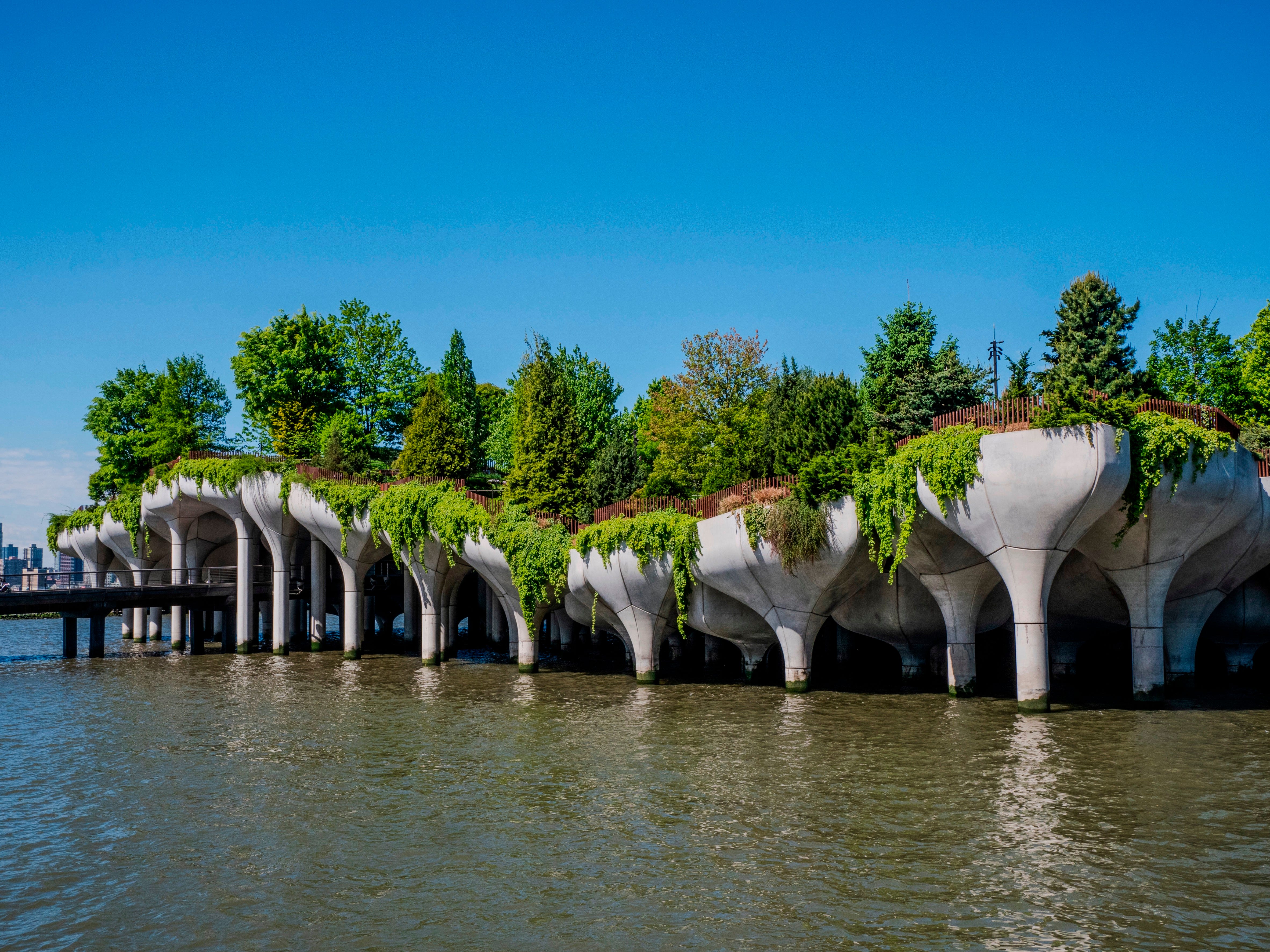
My first impressions: woah, that’s a very unique, very cool-looking park. Is this an example of coastal climate resilience? I was drawn by my initial perception that the park came about as a creative re-use solution to the pier that Hurricane Sandy destroyed in 2012. But that’s not exactly true. The Hudson River Park Trust had started trying to figure out a way to replace Pier 54 after shutting it down in 2011once it started to collapse. The hurricane simply served as a bold punctuation mark, rendering it officially irreparable.
But how did this highly unusual park come to be what replaced that dilapidated pier? The Hudson River Park Trust, a public benefit corporation formed jointly by the state and city of New York in 1998, is the organization behind it. It was established to “design, build, operate and maintain a new public park and estuarine sanctuary in and along several miles of the Manhattan shoreline.” When it became clear Pier 54 needed a replacement, Hudson River Park Trust officials decided to approach Barry Diller, friendly neighborhood billionaire. They did so because Diller had donated a cool $40 million through the Diller – Von Furstenberg Family Foundation (DVFFF), the philanthropic foundation owned by Diller and his wife (fashion designer Diane Von Furstenberg), to the implementation of the famous High Line park, which we discussed in part 1. They asked Diller himself to ideate and help fund a replacement for the pier. Diller in turn enlisted Heatherwick Studios (the same designer behind the Vessel at Hudson Yards) and New York-based landscape architects MNLA, led by Signe Nielsen.
The project took about 10 years to complete, including four years of planning, three years of construction, and several years of litigation battles. It opened to the public in May 2021, just as NYC began to lift pandemic restrictions. Diller even pulled out briefly due to the costly legal troubles, until Governor Cuomo saved the project in 2017 by brokering a deal to increase the state’s and city’s funding of the project to $50 million – each. Grounded in the context that NYC parks have long received just 0.5% of the city’s budget, it is interesting that this billionaire’s dream was saved by a sudden windfall of public money.
Health benefits for humans
The aspect where Little Island shines the most is in its benefits to humans. The plants successfully block out noise and winds along the perimeter, allowing the ability to temporarily escape urbanity. The arts and culture opportunities available for the community there are a win; there are two theatre spaces on opposite ends of the park, the larger one holding 687 seats. The Little Island team worked closely with local community arts organizations to establish high quality and ‘affordable’ programming, including educational events for kids. Little Island also runs a workforce development program for young people in New York, offering “paid jobs, mentorship, and hands-on training for college students and recent graduates interested in working in the arts, operations and hospitality.” That’s an awesome way to invest in the community’s young people.
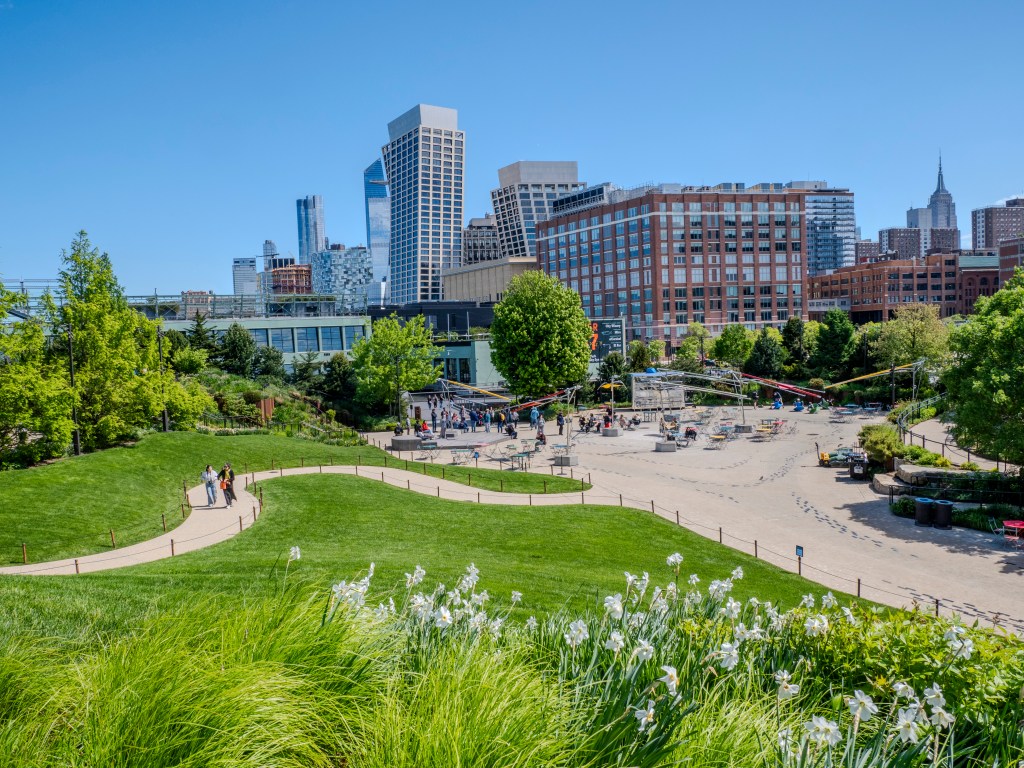
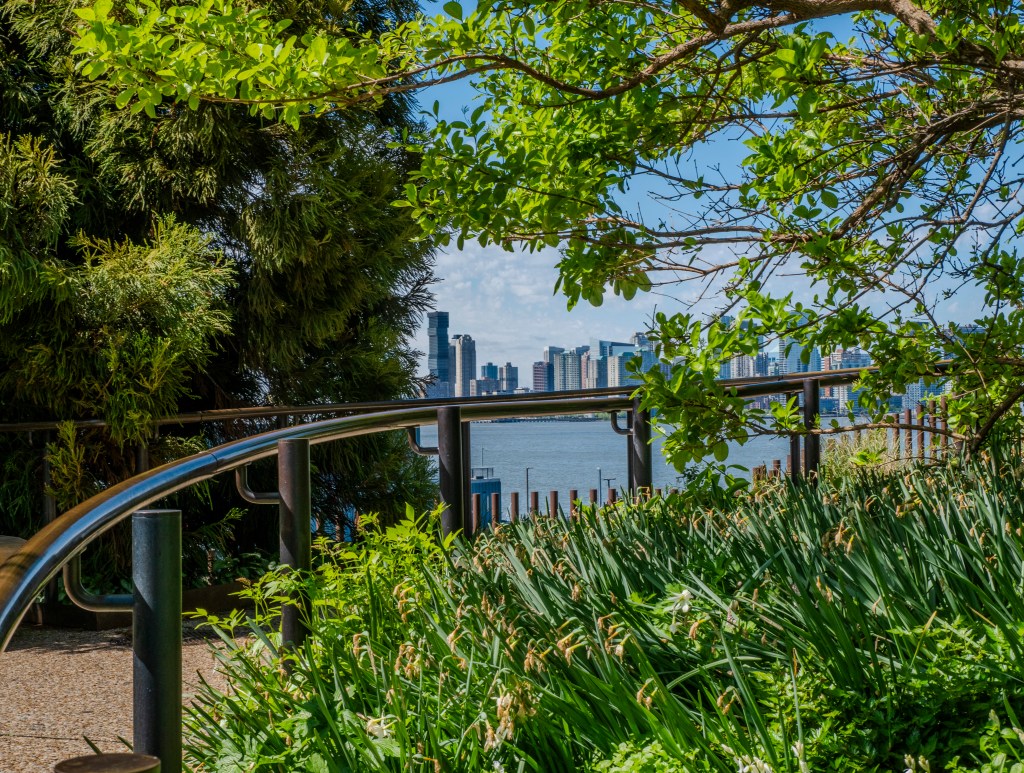
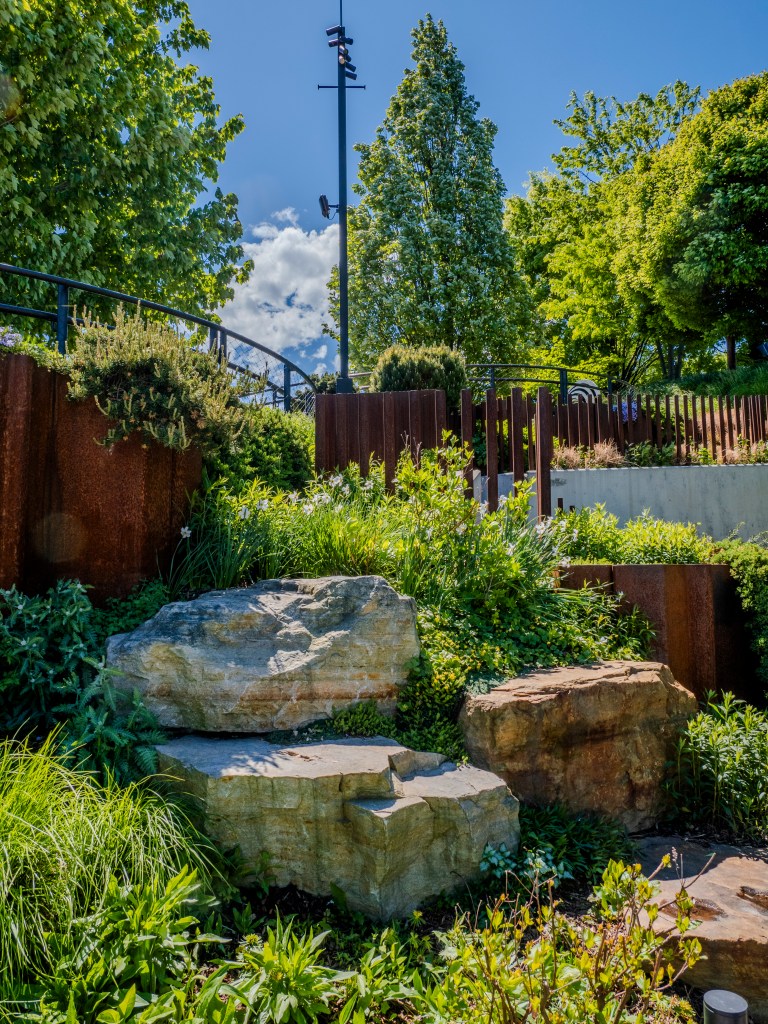
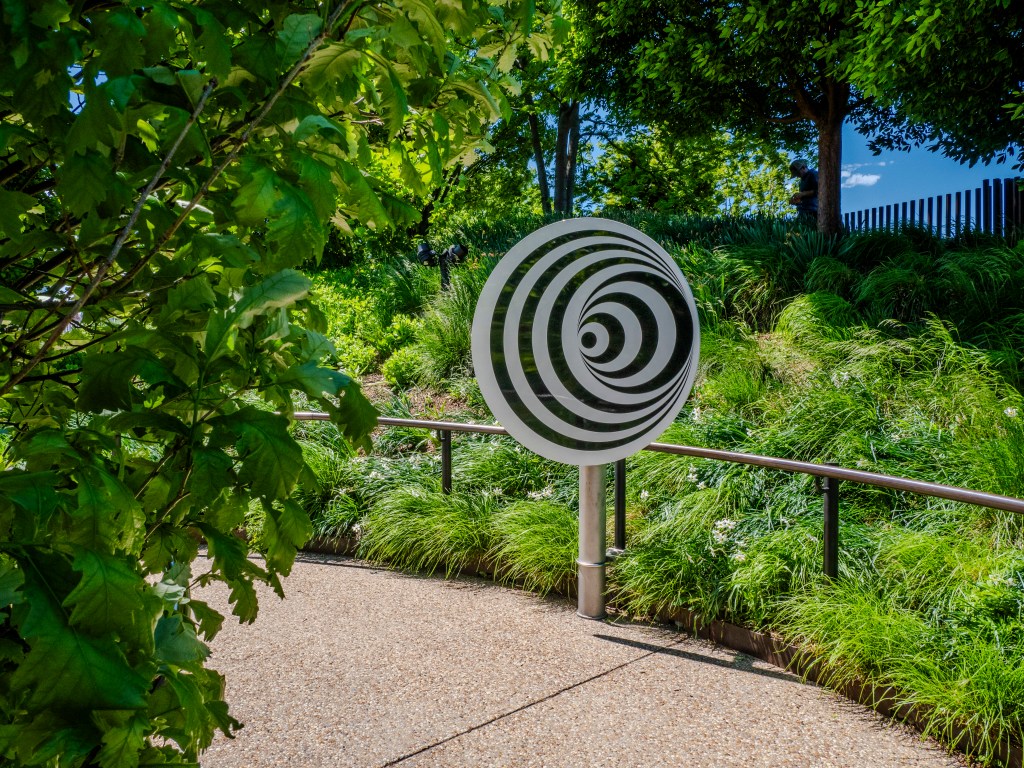
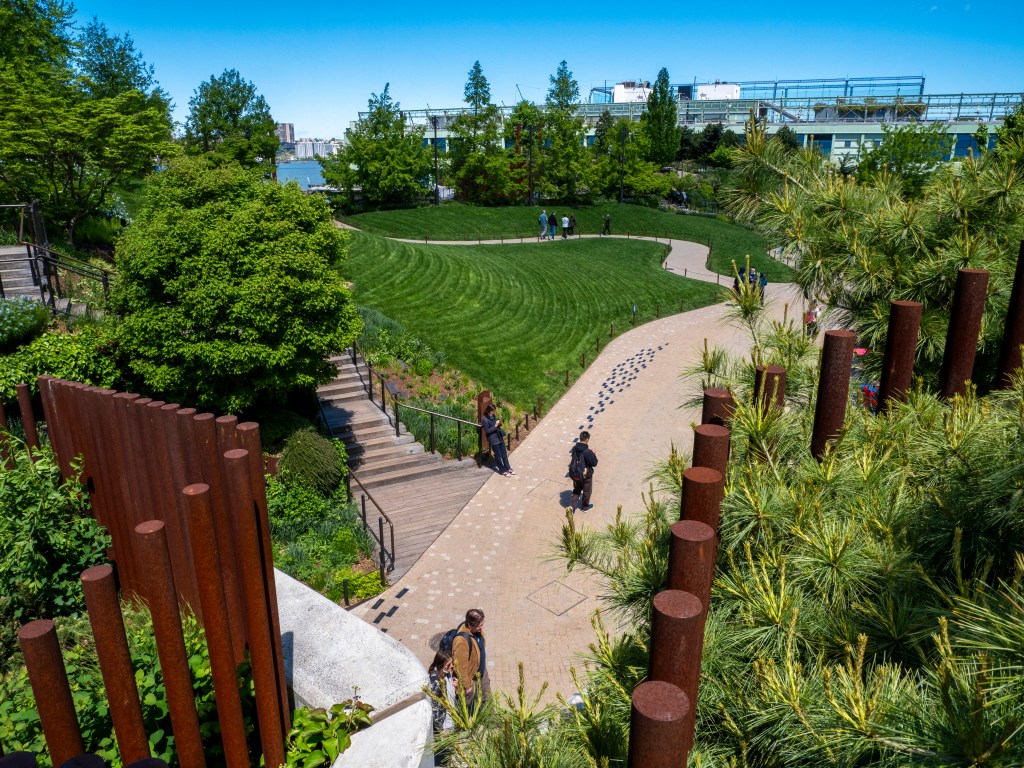
I did find the design of the park to be inspiring, with winding paths and a variety of scenic overlooks at all the different levels. Each quadrant is its own microclimate. The playground part was designed to be whimsical, and Diller wanted the experience of entering the park to invoke entering Oz. I can’t argue with the whimsy allegations.
What about ecosystem benefits?
Things get more iffy when it comes to ecosystem benefits. According to the Little Island website, “The majority of [all] the plants are native and selected to create habitat for pollinators and bird species.” That sounds great, but on the same page as this claim, you can click to see the full plant list for each month of the year. I asked my botanist brother, Ben, what he thought of their plant choices. He’s a huge advocate of native plants, and there’s a key concept to understand when assessing what plants he considers to be native. There’s something called a ‘cultivar,’ he explained. A cultivar is a plant that is genetically modified for the purpose of being more pleasing to human senses, through altering features such as the color, fragrance, size, etc. These alterations can be made to native plants, too; called ’nativars,’ some consider them to still be native plants, but others, like Ben, do not. That’s because pollinators intricately evolved alongside native plants, so that every single feature (even the ones we don’t understand or know about) endears them to one other, for mutual benefit. Any kind of tampering with the genetics of a plant, then, has an effect on everything, especially to the cultivar’s pollinators, to whom those plants become unrecognizable. To learn more about the importance of native plants, check out my previous posts where I interviewed Ben here and here!
So, what did he find? Most of the plants, no matter which month you look at, have names that end with ‘ ’. He tells me those apostrophes are indicators of cultivars. As an exercise, he categorized each of the plants in the May plant list for me to see how many are actually native in a meaningful sense. Ben’s breakdown: 79 cultivars, 6 invasive, 11 not native, 7 actually native to NYC area, 4 native-ish, and 1 native to North America. According to Ben’s calculations, declaring “The majority of [all] the plants are native” is more than a little misleading.
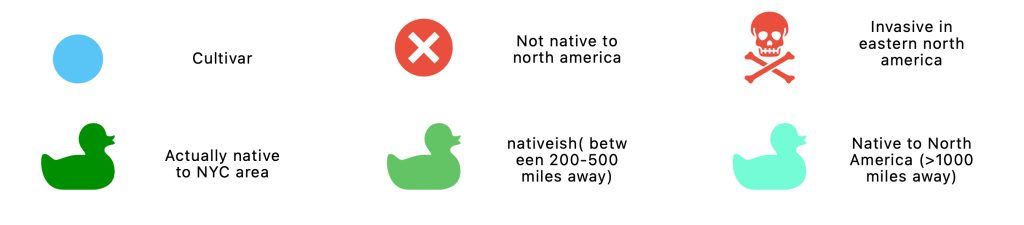
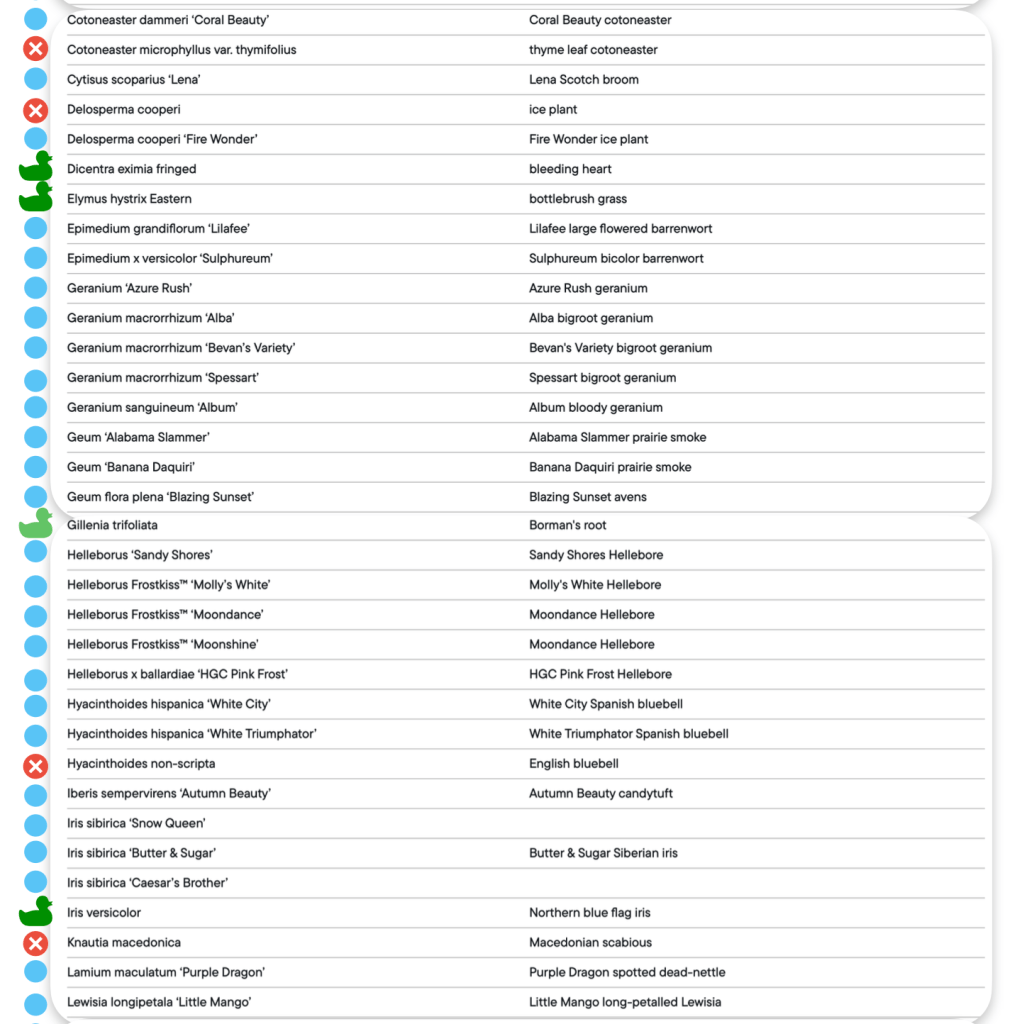
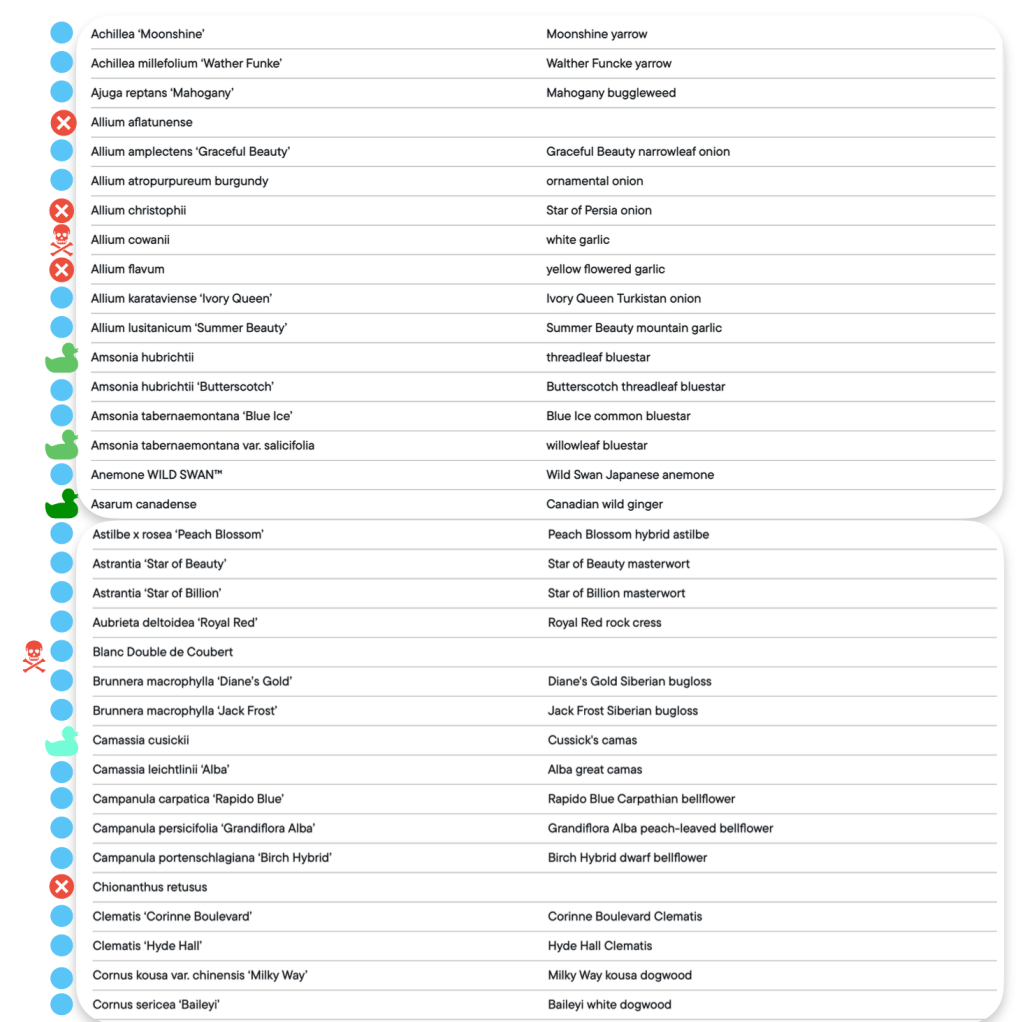
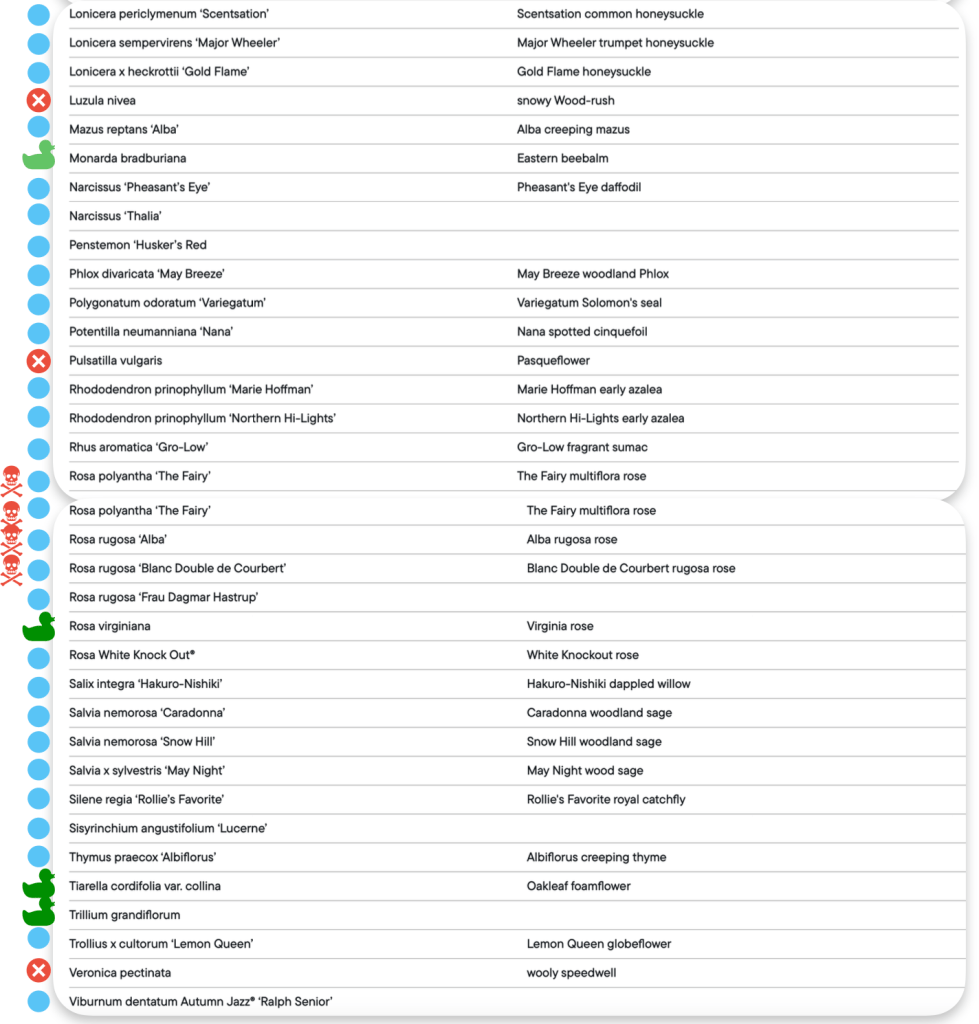
A Bloomberg article from 2021 sheds light on who actually calls the horticultural shots on Little Island. “I’m OK with messy, but I don’t know if [Diller] will be,” Nielsen says. “If he doesn’t like a certain amount of naturally-dried seed heads then we will need more gardeners.” The horticultural design choices seem to favor the sensory experiences of humans, including the outsized preferences of one billionaire, over the broader ecological impact.
Little Island does get ecological points for keeping the original Pier 54 piles to provide habitat for aquatic life. In stark contrast to the High Line, however, I don’t recall any educational signage about ecology or biodiversity efforts.
Climate smart?
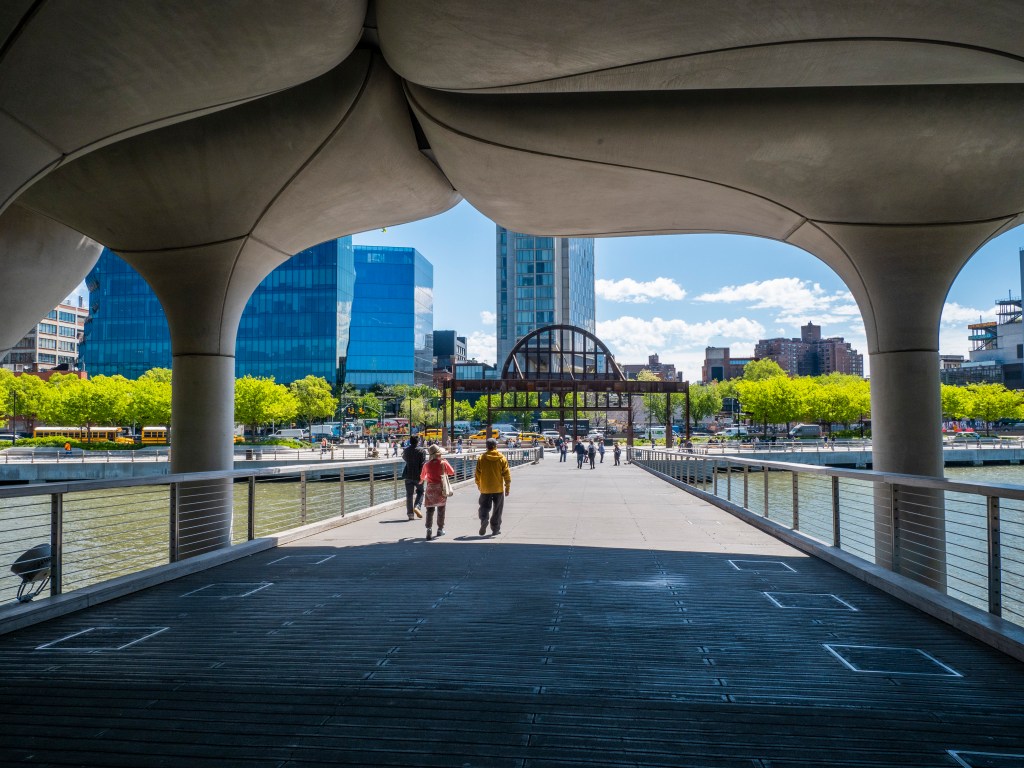
Little Island does a mixed job in the climate department. The park is good for flood resilience, serving as a giant sponge during storms and helping with filtration. Lower Manhattan is projected to experience 2.5 feet of sea level rise by the 2050s and over six feet by 2100. Little Island does account for this future climate reality, with the base elevated 16 feet above the water. The trees are also anchored down sturdily; in the landscape architecture audio tour, Nielsen highlights that no trees moved during a hurricane in 2020. Although, I think there is a strong argument to be made that there must have been a lot of unnecessary emissions in the construction process. Engineering firm Arup had to design and manufacture the 132 concrete tulip pods that hold up the structure of the park. Importantly, concrete is an extremely carbon intensive building material. Creating a park on existing ground is surely much more resource-responsible.
Democracy? what’s that?
The juiciest part to inspect is, of course, the billionaire of it all. It puts a real wrench in my ‘democratically made and managed’ quadrant of what a park should be. The day Hurricane Sandy hit in 2012, Heatherwick Studios had actually presented their design to Barry Diller and team that morning. So the design process was already underway, and public engagement apparently played no part. The governance structure of the Hudson River Park Trust includes a Board of Directors appointed by the Governor, Mayor and Manhattan Borough President and a 50-member Advisory Council composed of elected officials and representatives from business, environmental and civic communities. Yet the fact that virtually zero public input shaped the making of Little Island is quite telling. It’s an example of “when public space is constructed and regulated at the behest of park conservancies, public-private partnerships and other neoliberal devices that empower largely anonymous board members over citizens seeking to participate in community planning processes” as this article so eloquently puts it. Practicing real democracy through shared decision-making is messy, sure, but worth it. Doing so may have resulted in the project not happening, or maybe there would have been enough support for it anyway. Either way, it would have been the will of the people, and that matters. Diverse community collaboration is an absolutely essential part of democracy, including for the sense of ownership and shared responsibility it bears. There’s also the serious issue of gentrification. Any public improvement project like a park should necessarily include measures to ensure residents do not get displaced when nearby property values increase. These things should all be co-developed with the local community and the public governing body – which, again, Little Island failed to do.
Public-private partnerships are a great strategy for funding public projects, but danger arises when we let the scale tip way out of balance. In total, the project cost about $260 million. DVFFF covered the lion’s share of the bill, plus an extra $120 million set aside for 20 years of maintenance. That’s an exorbitant amount of private money for a public work, especially a park (and the largest private gift to a public park in NYC history), and especially one so tiny! In a CBS interview, Barry Diller admits he had the resources but not the right to build something like this. I guess having the resources to do something means having the right becomes irrelevant? Think of all the facets of our lives that are currently on some level controlled by billionaires. Let’s be less comfortable adding public spaces to that list.
The highly curated essence and design of the park invite skepticism at whether it can truly be used as a community hub, arguably another crucial pillar of what a park should be. Certain activities, like skateboarding and even dog walking, are prohibited and daily attendance is limited. There is little opportunity to gather in any way other than the few it was designed explicitly for (eating by the food truck, watching performances at the venue, sitting at a bench, or walking the paths). So many rules restricting public behavior make it seem less democratic than your average park.
To me, a core tenet of democracy is trying to do the most good for the largest amount of people. By virtue of its tiny size (just 2.4 acres!) and ridiculous construction and maintenance costs, Little Island fails on this count, too. With this money, there are so many more urban greening projects that could have been advanced, spread out to be accessible to so many more residents, and for the same resulting benefits, if not more. For example, “In low-density, peri-urban areas, gardens, bioswales, and urban wetlands can reduce water runoff, protect local waterways through the filtration of stormwater, and create habitats for fish and wildlife, none of which require excessive maintenance. Innovations in public architecture, such as urban street furniture (bus stops, bike stands, and benches used to create microhabitats for native fauna) and technology like Green City Solutions’ CityTree, a block of bioengineered moss and plants that trap air pollutants equivalent to 275 urban trees at 5 percent of the cost, also promise the benefits of biophilia at an affordable rate.” (Sierra Club). There is always an opportunity cost. When resources go towards one thing, that means they are not going to others. Residents of less privileged neighborhoods than Chelsea have a lot more to gain from having green space nearby.
The implications of a park like this are more than meets the eye. It’s easy to see the decline of democracy when it comes from the federal government, clear as day as rights are stripped away. It’s harder to identify when it looks like a magnificent new park designed for public benefit. Yes, we should be wary of even ‘good’ billionaires.
A Tale of Two Parks
Neither the High Line nor Little Island is your conventional park. They are both elevated (literally and figuratively) and offer truly unique experiences to connect with a green space in the middle of a dense urban area. What I love about these two projects is their theme of building back better. The High Line and Little Island both found a way to imaginatively redesign a piece of failing infrastructure that had outlived its purpose in order to provide a better, higher use. But where High Line can claim to be a paragon of creative reuse, Little Island is more accurately an example of unnecessarily bloated spending, even a billionaire vanity project.
While the High Line exemplifies so much of what a park should be in this century, Little Island falls a bit flat on substance, its positive reputation carried largely by its superficial wow factor. In fact, the reality of Little Island’s existence highlights some real root rot. These causes for concern are hidden by its flashy views and creative appeal, but are worthy of attention as patterns to avoid for future and current public space projects. The process of creation and the management of a public park are just as important as the ‘final’ product that the public enjoys, if not more.
Parks are such an insanely rich and unique opportunity to feed many birds with one scone (no killing birds with stones here). We should build these fertile third spaces to be all the wonderful things they have the potential to be – for the health and merriment of all, not least the natural world.
What do you think of Little Island? Let me know in the comments!

 Clarity in Catastrophe
Leave a comment