
An examination of two iconic NYC parks
I had the great fortune of visiting New York City for the first time in earnest a few weeks back. The Big Apple delivered everything it promises, from architectural brilliance to buzzing energy to fast transit, chance celebrity sightings…and truly stunning state-of-the-art parks.
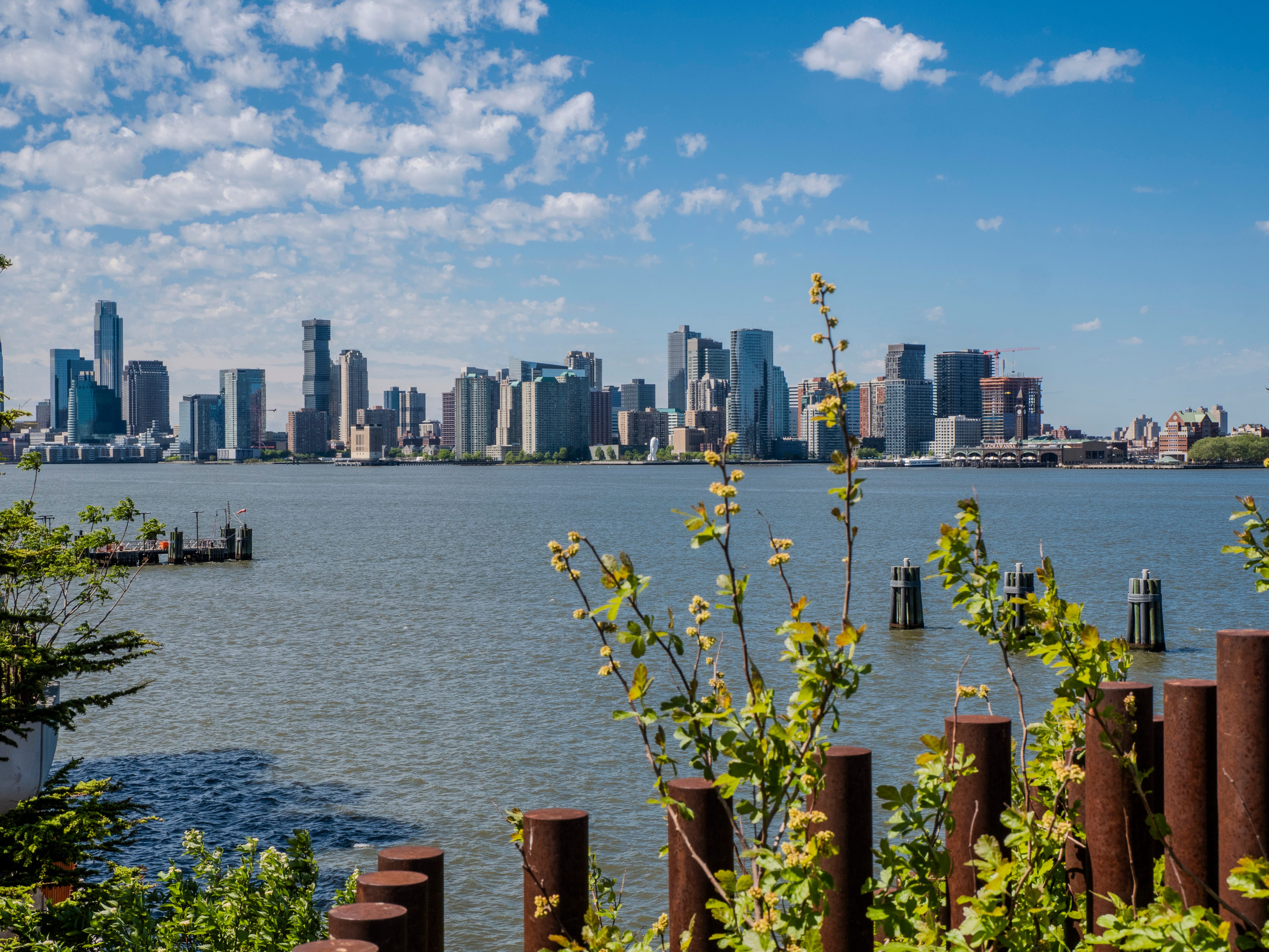
Two such parks I was most excited to experience were The High Line and Little Island. Situated just blocks from each other in Chelsea, near or in the Hudson River respectively, they both infuse the area with a lot of enchantment and wonder. I felt nothing but joy while visiting these parks. But as I learned more about them, tensions began to grow inside me. Researching them afterwards sparked unanswered philosophical and civic questions, paired with plenty of ambivalence. Like, what should we demand from public spaces? Who should we allow to pay for them? How should precious resources be allocated? Can we build truly visionary things in a democratic way? And, how should we weigh the ‘wow factor’ against providing the most tangible benefit to the most parties?
What urban parks should be
As humans we rely on heuristics, mental shortcuts that help us make sense of the immensely complex world around us. One many of us have adopted is park = good. Fair enough, but when it comes to decisions that impact the collective, it’s worthwhile to interrogate assumptions like this. I think in this Polarized, Decontextualized, Click-baity Time™️ we can also forget it’s possible to have mixed feelings about something, but there’s value in working out and talking through nuances. So today I want to explore these bigger questions, and consider all the things an urban park should be in the 21st century.
Public green spaces in urban areas are extremely important! I’d even call free access to nature a human right. These spaces have the ability to provide so many essential elements for a thriving community, both for the natural ecosystem and the human one in an urban area that’s pinched by multiple simultaneous threats and challenges.
With all this potential in mind, I made a list of everything I think an urban park should be today. I determine there are four main categories we should measure an urban park against if we want it to do as much good for the world as possible. A park should 1) provide health benefits for humans, 2) provide ecosystem benefits, 3) be climate-smart, and 4) be democratically made and managed.
- Health benefits for humans mean:
- providing an escape from the stressors of a city, a place to relax and to connect with nature
- a place to feel inspired and have unique sensory experiences
- arts and culture opportunities
- canopy protection from traffic sounds, pollutants & heavy winds
- safety & protection from the elements like heavy storms & extreme heat – especially flood mitigation if near water
- opportunities to connect with and learn about the natural world, first-hand
- Ecosystem benefits should look like this:
- a sanctuary for wildlife (providing food & shelter, such as through limited disturbance in management practices, like leaving leaves and seeds). A central goal should be contributing to productive habitats for pollinators, birds & insects. Parks can count species observed there over time to measure progress on this, as Brooklyn Bridge Park has done.
- In order to meet this standard, it should consist mostly of native plants
- sustainable / organic / natural maintenance practices (banning herbicides, pesticides, fungicides, instead opting for integrated pest management)
- a sanctuary for wildlife (providing food & shelter, such as through limited disturbance in management practices, like leaving leaves and seeds). A central goal should be contributing to productive habitats for pollinators, birds & insects. Parks can count species observed there over time to measure progress on this, as Brooklyn Bridge Park has done.
- To be climate-smart, a park should:
- use resources efficiently
- native plants also help meet this standard, because in place of lawn turf they save water & energy
- choose plants that are expected to be acclimated to the area’s projected changed climate a few decades into the future
- use all-electric maintenance tools, nothing powered by fossil fuels
- embrace an evolving landscape of plants to continue thriving as external conditions change
- use resources efficiently
- ‘Democratically made and managed’ requires a park to be:
- stewarded by the public, the local community
- something the majority of the community supports & had the opportunity to help create
- accessible to all
Let’s evaluate how these two NYC parks hold up against my list.
Park no 1: The High Line
The elegant elevated park you see now was morphed from the industrial railroad that was originally built in the 1930s. It once ran trains carrying meat and products to factories in the Meat Packing District, until freight transitioned from trains to trucks. The High Line fell into disuse, finally coming to a full stop in 1980. Over the next decade plus, nature gradually made its home on the unused railroad. In 1999, two community residents began to save it from the destruction it was headed for. Those neighbors, Robert Hammond and Joshua David, started the non-profit Friends of the High Line, and spent the next few years gathering a diverse community of supporters for the cause until the government approved it – grassroots democracy in action. The High Line opened as a mile and a half long public park in 2009.
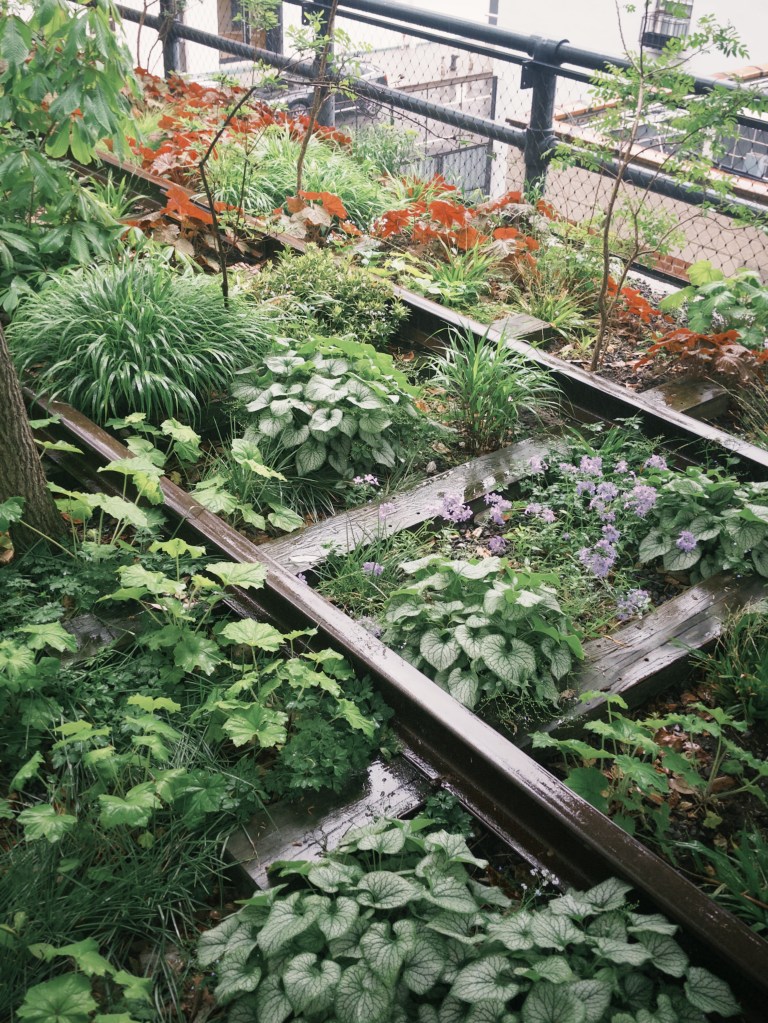
Looking at my list of health benefits for humans, the High Line checks it all. Their website showcases a packed calendar of free community events like stargazing, tours, Piano Mondays, and zumba. When I walked the High Line myself, I felt transported. It’s special to simultaneously experience nature and wildlife separate from the street level of the city, while still enjoying scenic overlooks of the Hudson River on one side and bustling city scenes on the other. The High Line also stands out for its educational signage, which helps to amplify the human connection with the surrounding nature. As you move through the path, you encounter a section of large colorful poster boards on either side, which tell the story of the park and its importance. Photos, illustrations, and accessible blurbs of information explain the ecosystems of the park, its positive impact on both the environment and human mental and physical health, wildlife witnessed there, and the maintenance strategies used to bolster climate resilience and biodiversity.
In this recent panel that Friends of the High Line hosted, Senior Horticulture Manager Yuki Kaneko goes further into depth about these ecosystem benefits and maintenance practices in place at the High Line. Kaneko shares that they support biodiversity by opting out of synthetic pesticides and herbicides and leaving the previous season’s growth intact long enough to provide food and shelter for wildlife through the winter. These practices pay off as migratory bats have been found to use the High Line as their feeding site, along with many migratory birds all throughout the year (bats are a declining species and vital for ecosystem health). They are starting to go even further to help increase biodiversity across the city, by hosting plant sales of propagated locally adapted plants from the park. Earning climate-smart points from me, workers at the High Line use all-electric tools and effectively and strategically allow the landscape to evolve. They are attuned to the delicate shifting balance of plant species health in the midst of local environment changes such as the pandemic shutdown, nearby building construction, and microclimates. This ability to adapt a park to the changing environment is crucial in this time of climate change.
Finally, as previously stated, this park emerged from grassroots community action – not from the top down. Because of that effort and earned community buy-in, the founding non-profit Friends of the High Line generates nearly 100% of the High Line’s annual budget from members and supporters. It’s a true staple of the community, a shining example of what a park can be.
Tomorrow, we’ll discuss Little Island…stay tuned! There will be a lot more to unpack.
Is there anything you would add to my list of things a park should be? Do you know of any parks that exemplify all these things? Let me know in the comments.


 Clarity in Catastrophe
Leave a comment