
An interview with Karen Chaw of The Daisy Refillery
Since September of 2023, I’ve been receiving regular deliveries of household and personal care essentials straight to my home. Shampoo and conditioner, various soaps, lotion, dish scrubbers, the like. Pretty normal, except they’ve been coming from a local small business rather than a Target or Amazon.
In the building where I lived back then, we had someone in charge of receiving the packages, but now, her smiling face greets me directly at my door every month when she personally drops off my order. Recently, I got to have a long conversation with the woman who has been keeping my kitchen and bathroom stocked with amazing clean, durable and plastic-free products these past few years. Yes, woman – the entire business of The Daisy Refillery is singularly run by Karen Chaw.
I had already been ordering sustainable household and personal care products from a handful of different zero waste stores since 2019. I found out about the Daisy Refillery through a simple search of zero waste stores in the Bay Area because I wanted to find a local option after moving into my own place in San Francisco. However, most people discover The Daisy Refillery by meeting Karen in person at the many farmers markets she pops up at across the Bay Area.
Wait, what’s zero waste? And what’s a refillery?
Zero waste has different technical meanings in different contexts. You might see it in city policies and climate action plans, referring to incentives and rules that help move us towards more of a circular waste management system. A circular economy essentially means: rather than a linear journey of raw materials —> production —> consumption —> landfill, raw materials are able to organically return back to the environment after use or be kept in productive use for a long time, rather than immediately turn into pollution. Some also use the term zero waste to refer to a specific accomplishment of 90% diversion of waste from landfills and incinerators. This is the peer-reviewed, international definition of zero waste, as of 2018: “The conservation of all resources by means of responsible production, consumption, reuse, and recovery of products, packaging, and materials without burning and with no discharges to land, water, or air that threaten the environment or human health.” But here, I’m talking about the zero waste lifestyle movement, which pretty much just deals with the consumer’s role in the advancement of a zero waste economy.
In effect, the zero waste movement has a lot in common with going ‘plastic free.’ That’s because most of the world’s waste is composed of single-use plastics. But the values of the zero waste movement go beyond just avoiding plastic, to scrutinizing the lifecycle of everything we consume as we go about our daily lives. It’s putting an emphasis on reusing materials to the fullest extent possible and avoiding buying new things altogether whenever feasible.
Zero waste stores sell only sustainable products with plastic-free packaging. A refillery, then, is a specific type of zero waste store, where you can bring your own reusable containers to be refilled with the products of your choice.
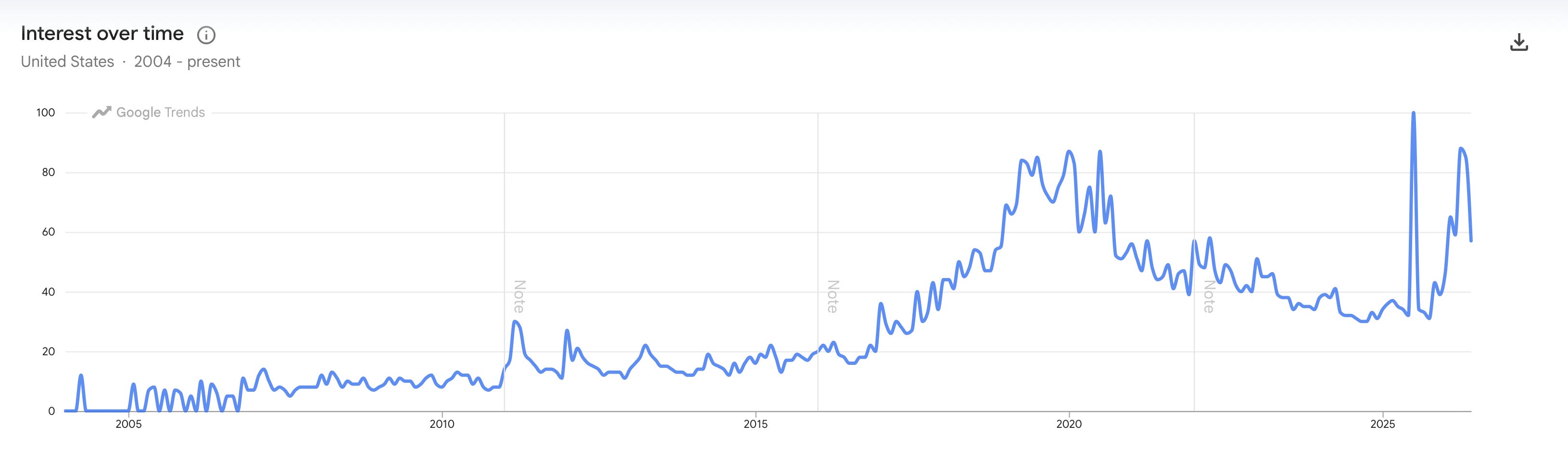
The so-called ‘zero waste movement’ grew into a sizable subculture throughout the 2010s, hitting its peak of online virality in 2018 and 2019. Most people still aren’t familiar with the terms ‘zero waste’ or ‘refillery’ and what they mean. About a decade into the zero waste lifestyle movement, why hasn’t it gone mainstream? Maybe because the term ‘movement’ is too generous.
It was always a trend, not a movement.
When zero waste was at its peak visibility on social media, Instagram and Youtube were ‘littered’ with a certain kind of image: the infamous trash jar. In fact, an article with zero waste influencer Kathryn Kellogg holding her trash jar proudly is what first introduced me to the zero waste movement. The trash jar was a mason jar that the most committed zero wasters were able to hold all of their trash in. They lived by a philosophy of avoiding anything that would produce trash too large to fit into the jar, and the jar would supposedly contain the entire sum of trash they produced over 1, 2 years. This highly contagious and controversial image can perhaps be credited with both the spread and the failures of the consumer-driven zero waste movement. In short, it brought a lot of hype. It also prevented the movement from having teeth.
Instagram accounts and Youtube channels gained decently large followings as content creators dedicated themselves to showcasing their zero waste lifestyles. These creators shared things like aspirational collages of plastic-free grocery hauls from farmers markets and bulk food stores, zero waste bathroom routines, thrift hauls, tips for throwing a zero waste party. Of course the trash jar, for a limited but very impactful period of time, served as the ultimate proof of zero waste living – the gold standard. It represented an extreme challenge that seemed interesting to try, but is near impossible for the average person to maintain. And then, around the pandemic or shortly after, a lot of these zero-waste centric creators and influences got burnt out. Karen Chaw noticed this, too:
“Throughout the years I’ve also noticed how their journey has changed. And it’s interesting to see how many of them started off with I wanna be as zero waste as possible. I wanna do whatever I can, I’m gonna try to get rid of as much plastic as possible. And then you start realizing, that’s not really possible. And you see the guilt in a lot of these creators who are like I tried to do this but there’s only so much I can do.”
When Karen founded The Daisy Refillery, she had a goal to expand this perception of zero waste beyond just another trend. “Zero waste unfortunately is still seen as a trend as opposed to a way of life. And that’s something that I really wanna change.”
Accessibility issues – who is this lifestyle for?
Another major reason the zero waste lifestyle movement seems to not have taken off more has to be accessibility. Despite good intentions, the overall impression that came across about who it was for was not inclusive. Based solely on social media followings, the majority of the zero waste lifestyle movement’s champions were white women. The lack of diversity among those setting the culture led to certain assumptions – some of which hold truth.
A zero waste lifestyle seems unaffordable, and that’s partially true. A lot of zero waste products do cost a good deal more than their conventional counterparts. Over time, that investment can pay off in savings; for example, you only have to buy one Swedish dish cloth to last several months, while continuously buying more rolls of paper towels adds up. But upfront investments are not approachable for many people who can’t afford to consider anything other than the cheapest option in the moment of purchasing. It’s also more expensive because a small business can’t compete with the cheap prices afforded by a corporation’s access to economies of scale. As such, these products have developed a bit of a reputation as premium or luxury goods, which is not a good thing if the goal is to bring in as many people as possible.
The zero waste lifestyle has even been associated with an odd kind of martyr complex. In order to achieve low or ‘zero’ waste, a lot of creators have shown themselves lugging around heavy glass containers to their refill store. People who don’t live near a good farmers market or bulk food store, then, might feel like they need to shop at several different stores to be able to ensure everything they buy is free of packaging. The message seemed to be: This lifestyle is hard. Prove how much you care by putting in the work and making necessary sacrifices to succeed anyway. Not a very enticing or welcoming message, unless you’re a competitive person. But I’m pretty sure competition isn’t great for large-scale social movements. So there were inclusivity issues, but also literal accessibility barriers.
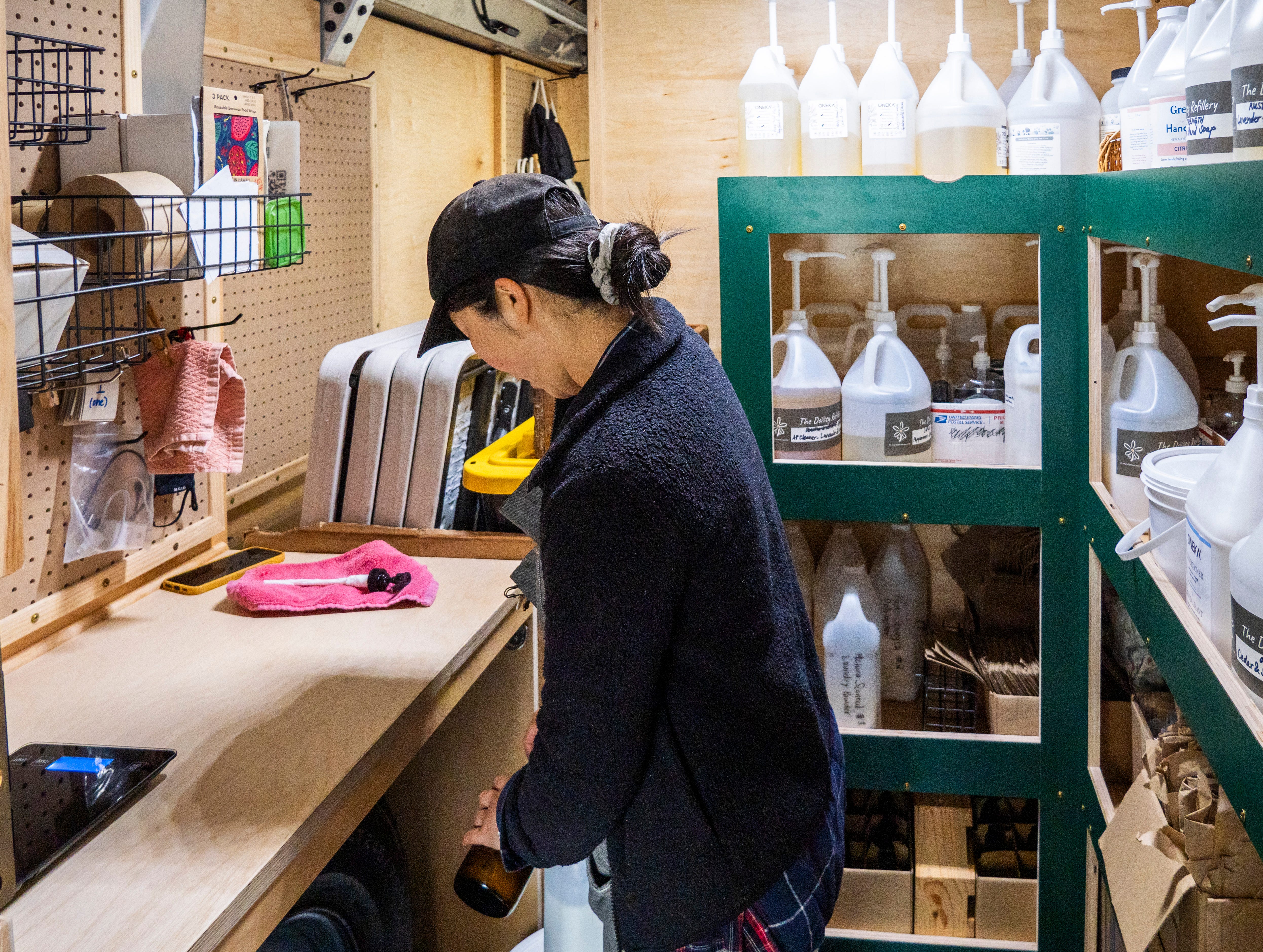
When Karen Chaw began her intensive research into starting a refillery business, she planned on it being a physical storefront. But then life happened, and the pandemic forced her away from her brick and mortar plans. She had to pivot to mobile delivery. While it wasn’t her choice, she has come to realize the immense value of her business being mobile. It’s a solve for one of the zero waste movement’s biggest accessibility barriers. Remaining mobile in the years since has been a decision to fully embrace this valuable component. She told me about a couple who worked long hours in tech and didn’t love having to go out every weekend to refill their containers of products, but they were so committed that they made it a priority. Even for a couple like that, it wasn’t always possible to sustain it because sometimes they had to travel or had other commitments. Karen put it like this: “Access to sustainability isn’t just, you know, opening up a storefront in your city and then realizing, oh, I’ve addressed all access within the city. It’s also accounting for people’s lifestyles.” She explained, “So by creating that delivery model and realizing that…accessibility also meant addressing some of these different lifestyles, and providing a convenience. The reason why I decided to stay mobile was to address the lack of convenience that a brick and mortar may not provide.”
When she spoke to her customers about becoming brick and mortar, their feelings were clear:
“I remember my one year mark, I was speaking to my community and folks were just like, ‘You know, it would be really cool and we’d still definitely support you, but I don’t know how accessible it would be for me. I prefer you coming to us.’”
Bad messaging
The term ‘zero waste’ itself reinforces these problems of insufficient inclusivity and accessibility. In a capitalist society, it is impossible to produce zero waste and still survive. Some find the term to be aspirational, a reminder of the ultimate goal of always moving towards zero waste, but many more find it overwhelming and discouraging. I wondered if this was why Karen chose not to brand The Daisy Refillery as a ‘zero waste’ store, even though it totally fits the bill of one. She confirmed my instincts correct, explaining she doesn’t publicly address her business as a zero waste store because the term can sound overwhelming to people. “That’s not something that I ever want to put upon a person because that usually turns them away from the entire movement altogether, from wanting to live sustainably, because it’s like, ‘well, if I can’t do it perfectly, I won’t do it at all.’”
“It’s that idea that we all have to do things perfectly when we don’t even have the resources to do things perfectly, that I think harms the entire movement.” – Karen Chaw
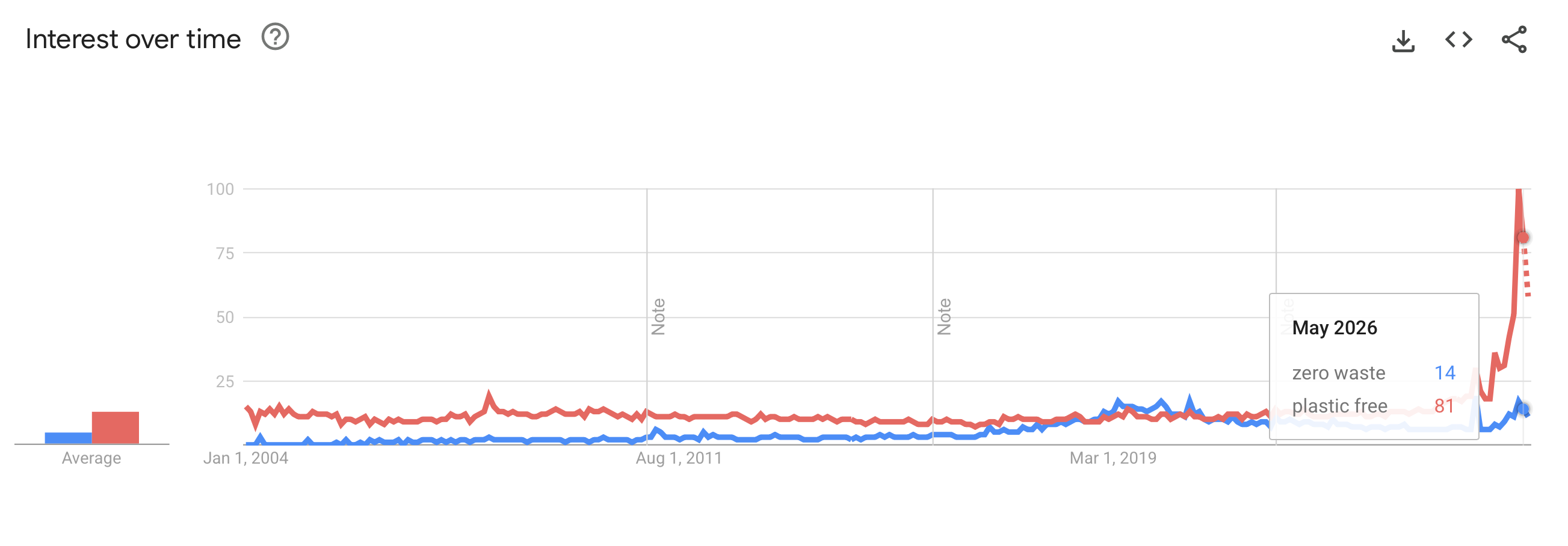
After looking at the Google search trends data for the term ‘zero waste,’ and comparing it to the phrase ‘plastic free,’ it seems that plastic free is better terminology for a very similar idea. It is more easily understandable and shows to have more staying power than ‘zero waste.’
Google Trends data for the term ‘zero waste’ in the United States, since 2004:
Google Trends data for the term ‘zero waste’ and ‘plastic free’:
It’s still here, but it’s evolved
Today’s supporters of the zero waste movement have dropped the toxic messages and assumptions that once were floated too frequently. It’s widely acknowledged now how unrealistic and unhelpful a trash jar is, just like any delusions of producing literally zero waste. Gate keeping a movement that needs the masses to succeed is a fool’s game. There’s a popular phrase many have claimed as a mantra for this new outlook. It’s from a 2021 zero waste cookbook by Anne-Marie Bonneau: “We don’t need a handful of people doing zero waste perfectly. We need millions of people doing it imperfectly.”
Karen tries to impress this notion onto her customers, especially the ones that are new to their sustainability journey. She explained, “many of them express wanting to live more sustainably, wanting to move away from ingredients that are not as good for themselves, for their children, but they feel rather overwhelmed by it all. And this is why whenever I speak to a customer I always, always stress, especially if I know that they’re very new in this journey, that it’s not so important that you are getting rid of every single thing that you own to switch to something that is a more sustainable alternative, but rather doing it at your own pace, within your own comfort zone, within your own means.”
One of the most defining patterns and pitfalls of sustainability / climate / environmental causes that I’ve noticed is a recurring pendulum swing between embracing individual behavior changes and pushing for systemic change. That perspective is misleading and counterproductive. The zero waste lifestyle movement as a whole has put entirely too much onus on the individual consumer to add on what can quickly become many new, tedious chores into the overly packed schedule of concerns and responsibilities many of us already hold. That’s where it went wrong. The assumption that individual purchasing power alone could stand a chance against an entire global economy churning out cheap, shitty, single-use plastics and products that will go immediately to our overflowing landfills was obviously incomplete. When a global pandemic upended the entire economy and all of life as we knew it, and as the world in general has gotten increasingly dystopian and terrifying, it’s understandable that to so many people, the impact of where you choose to buy conditioner feels pointless and silly.
individual behavior change vs systemic change: the false dichotomy
So many things need to change simultaneously for the zero waste consumer movement to keep growing and expanding. Structures and policies need to change to enable more people to make these better choices more easily. It should not require countless individual sacrifices to live a low-waste lifestyle.
Karen reflected, “I don’t really know what needs to be changed. I feel like, there’s always that conversation of, is it the corporations? Is it us as consumers? Is it the fact that there’s no access to certain things? I feel like there’s a culmination of things that really need to be changed, a lot of factors that have to be considered. And, you know, maybe I need to focus on creating more content to provide education to my customers so that people know that something like this exists. Or maybe it’s a matter of, hey, let’s really start talking to our government about specific regulations that need to be in place to ensure that people can live more sustainably. Perhaps it’s their supply chain.” The truth is, we need all of those things together.
Karen told me the story behind the name The Daisy Refillery. It’s inspired by a short story called “The Daisy” by Hans Christian Anderson. The story is a parable about naivety and the broad impact of our individual actions. Two young, naive boys capture a lark because they find it beautiful. Of course, they unwittingly neglect the lark’s needs and unfortunately starve it to death. What they completely overlook, however, is the fate of the small daisy that ends up in the cage with the lark, too. Karen explained the meaning of this. “It’s that realization that a lot of folks don’t perhaps understand the extent of their actions and how they can affect nature – whether it be the lark, whether it be the daisy. Sometimes we don’t recognize the beauty of certain things, like the daisy. Sometimes we care very much so about certain things and then fail to realize how our actions could potentially hurt and harm those things we love. And that’s what I see in human habits.”
The argument is that our small, individual actions do matter and do have an impact, even if we can’t see it. She says the way in which we consume is important. Everything is interconnected, and our actions don’t just impact ourselves, but they have ripple effects on every other living organism we share this planet with.
The appetite remains
On the consumer side, Karen sees that people need more options and more education, and that’s where her focus lies. She speaks to many customers who don’t understand, for example, how our recycling system works. She tries to provide as much education as she can, making sure to list all the ingredients and materials in each product she sells, how to use them, and how to properly dispose of them.
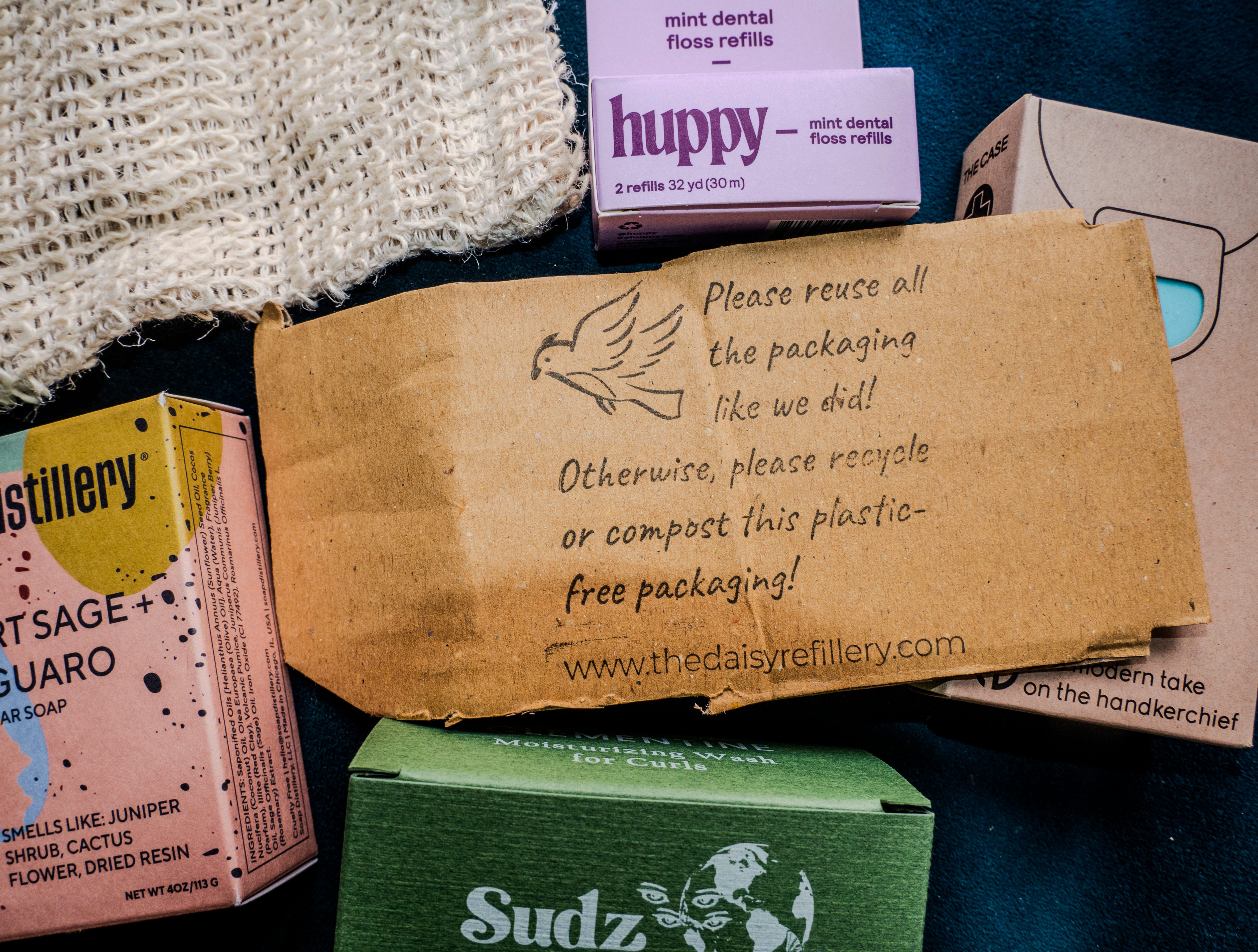
She has to confront the lack of widespread knowledge about her kind of business on a regular basis. As evidenced by the red squiggly line underneath every time it’s typed, ‘refillery’ isn’t an established word yet, even though many refilleries do exist in the world. She is the owner of a type of business that isn’t even recognized by the dictionary yet.
She does see growing visibility about sustainability and the dangers of plastic, though. Customers will tell her they learned about refilleries and plastic-free products from places like TikTok and The Plastic Detox documentary on Netflix.
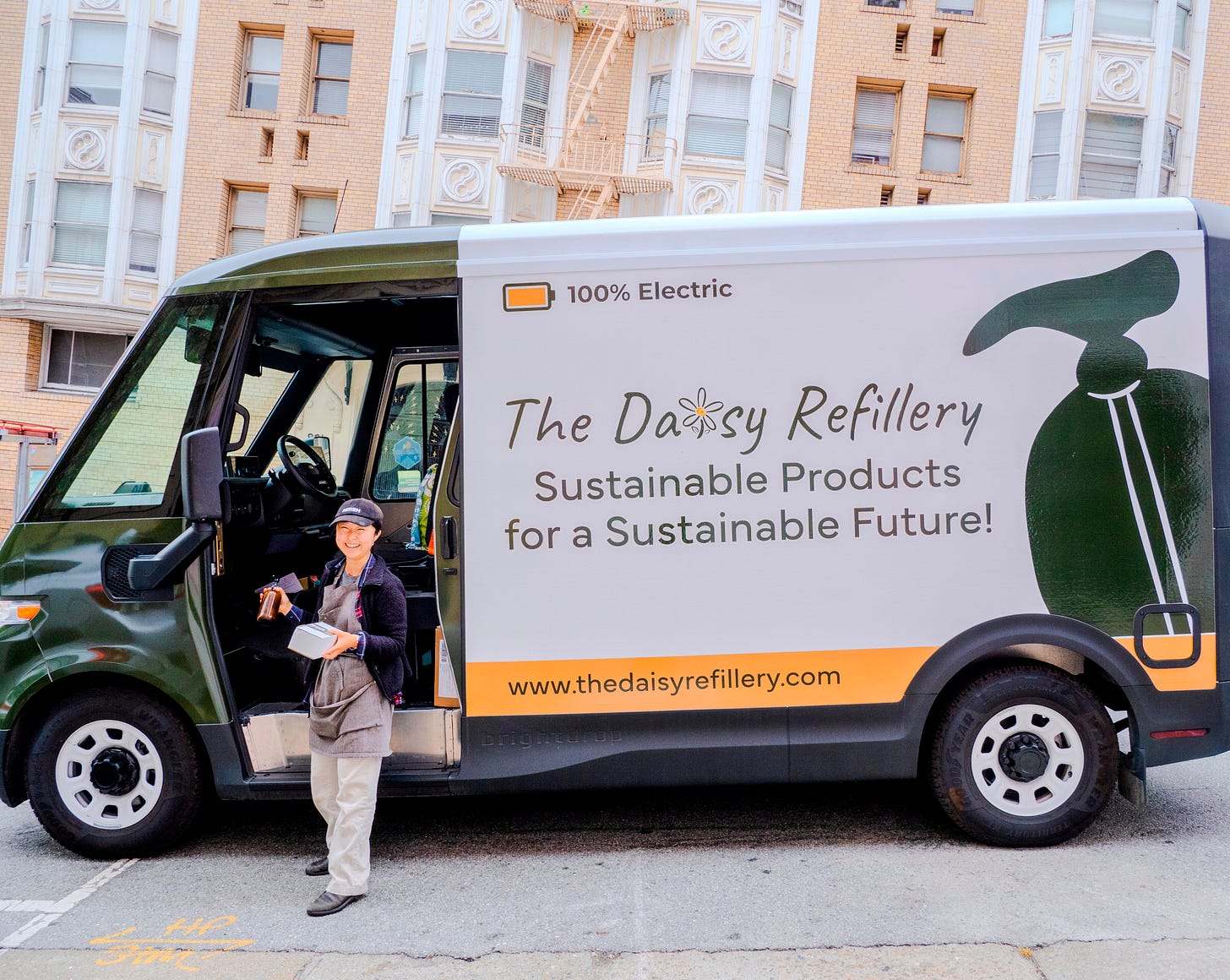
According to Karen, The Daisy Refillery is stable and she’s seeing a lot of growth. She recently procured the business’s fully electric van, something she long wanted but couldn’t afford at first. “I do see an upward growth in our community, like the number of people who are interested, the number of people who want something like this to exist. And I do get a lot of tourists who are like, ‘wow, I wish this was something that also existed where we live.’ And lo and behold, it usually is.” (Use this amazing directory to look for a sustainable store near you.)
There’s something nice about combining necessary consumerism with seeing a familiar face. Even better when that face is a neighbor actively working hard to serve your community and make the world a better place:
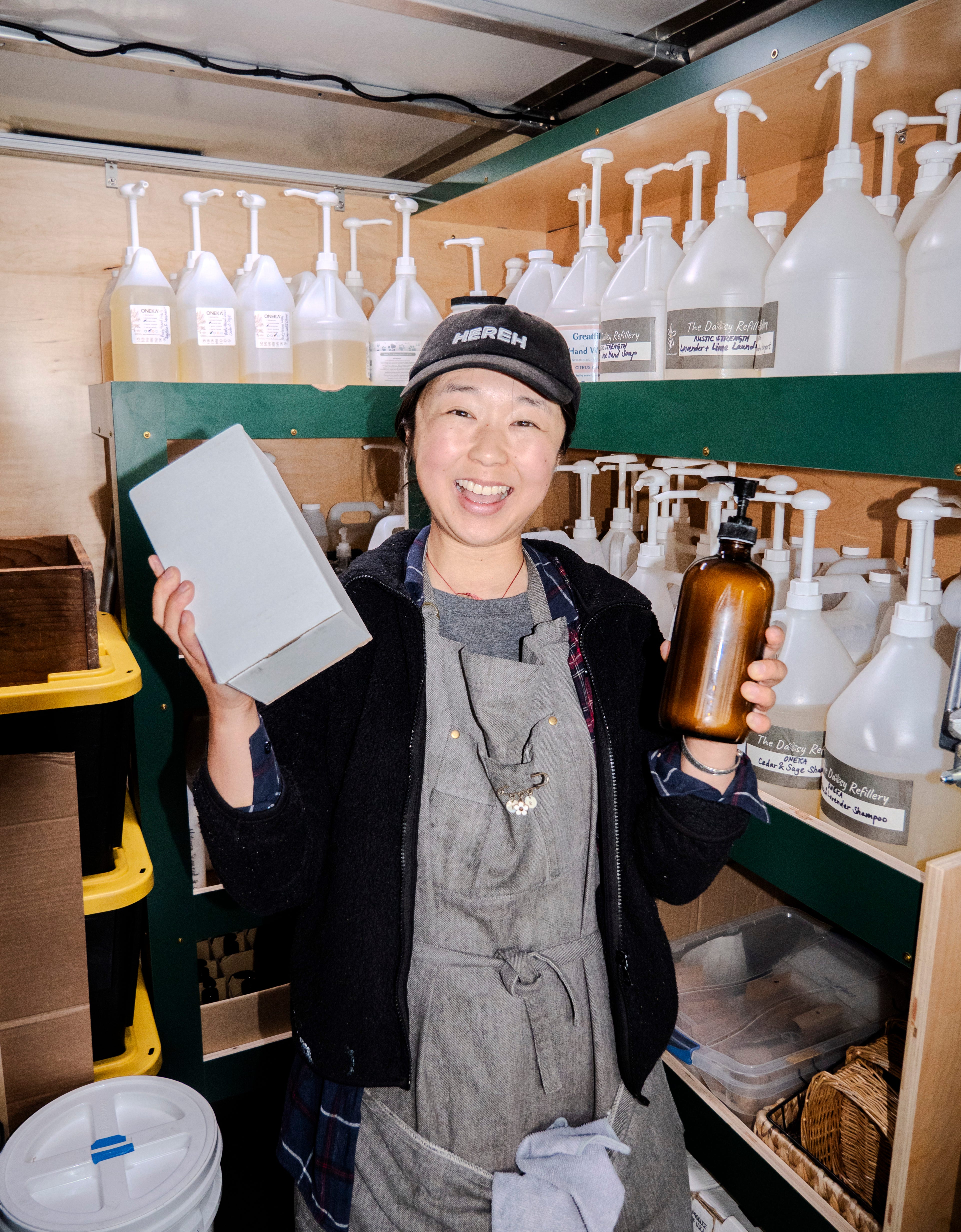
Check out The Daisy Refillery here, and support a local refillery ❤️


Leave a Reply