
Lies fed to us, & how we can protect ourselves
Plastic lies we’ve been told
It’s becoming an age-old story: manipulation of the public by industry, motivated by profits.
We’ve seen this same playbook by the tobacco industry, the fossil fuel industry, and it’s now clear the plastics industry has done the same.
My last post faced the really depressing mountain of research supporting the myriad negative health impacts that plastic exposure is having on us, particularly on women. With that knowledge has come a lot of cognitive dissonance. It’s disconcerting to see study after study of these terrible associations between plastics and our health, while still needing to go about daily life where this dangerous material is literally everywhere we turn and no one bats an eye at its omnipresence! How did we get here? It’s not because consumers are stupid or don’t care about their health. We’re in this position because we’ve been lied to about what’s safe to use and touch every day, so now we have to do our own research.
There are two key lies the plastic industry has told us, both implicitly and explicitly: 1) Plastic is recyclable, and 2) Plastics are safe to use and have all around us (and that the absence of one dangerous chemical means it is any safer).
1) Plastic is recyclable
You know that chasing arrows symbol you see on all kinds of plastics? It doesn’t actually guarantee the item it’s on is recyclable. If it looks suspiciously like the universal recycle symbol, that’s only because it’s meant to deceive you into believing it’s recyclable so you feel okay purchasing it. Indeed, the US Environmental Protection Agency (EPA) called the usage of the symbol on many plastic products “deceptive marketing” in 2023.
The inception of single-use plastics, and the subsequent blowback. Plastics have so totally infiltrated modern life that it’s hard to believe single-use plastics didn’t exist less than a century ago. It wasn’t until midcentury that the plastics industry, which had revolutionized scientific and medical advancements, saw an even greater opportunity for profits. To use the power of plastics to remake the entire cultural fabric of society. To build a disposable society. That’s when manufacturers began manufacturing the false need of single-use plastics for everyday life, a cunning plan to keep sales eternally climbing higher. The ensuing waste problem soon became clear, and policymakers tried to institute bans on single-use plastics. Congress itself considered completely banning single-use beverage containers, but the plastics industry successfully lobbied against it (Grist). In response to producer-directed anger about the growing waste polluting cities, plastics corporations created anti-litter organizations (the first being Keep America Beautiful, founded in 1953). They made it an individual responsibility problem.
As their industry influence shut down bans on single-use plastics, plastic makers also started lobbying for recycling. Specifically, taxpayer-funded curbside recycling. Just as nicotine companies and fossil fuel companies have shifted their blame onto individuals, the plastics industry followed suit in order to combat growing threats to its continued existence. This local, curbside recycling stuck, and it’s the same ‘solution’ we’re stuck with today. Individuals are expected to carry the entire burden of recycling, from traversing and decoding the incredibly complex and ever-changing municipal rules about not just what is recyclable but what is accepted, where, and how to properly sort and recycle it. The amount of hoops individuals are expected to jump through to ensure their recycling is successful is untenable, and it’s a mirage that regular citizens have control over it.
The concept of recycling emerged as a beloved environmental solution at a very opportune time for the plastics industry. The universal chasing-arrows recycle symbol was created by young graphic designer Gary Anderson in 1970, the year of the first Earth Day.
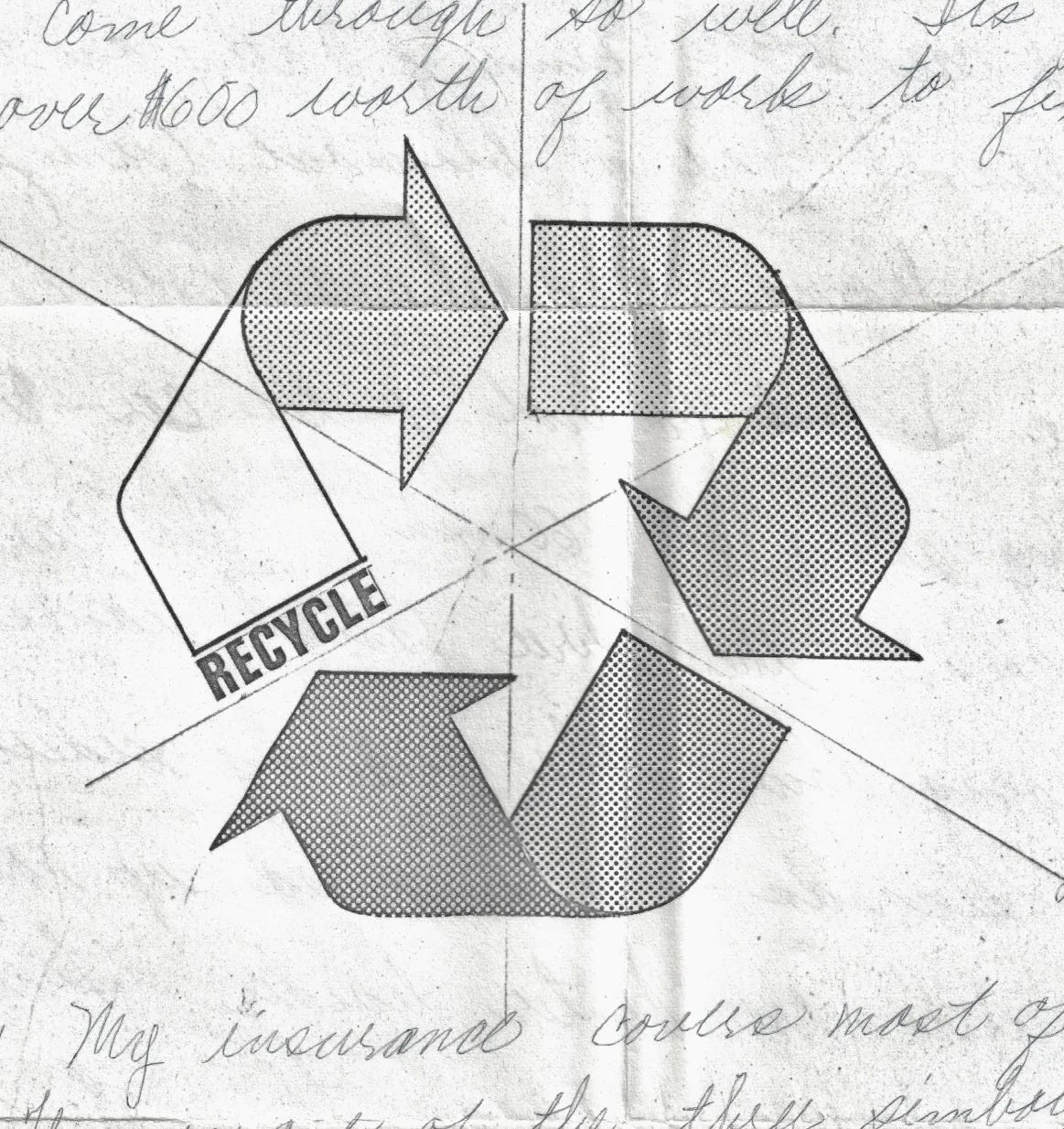
The plastics industry took advantage of this naive but genuine mass enthusiasm for recycling, and hopped on board to detract from their massive role in waste generation in the first place. Now it would be up to local governments and individuals to deal with all the waste. The plastics industry created their own ‘chasing arrows’ graphics in the 1980s to promote consumer recycling of plastics. It’s called the plastic resin code, and it’s the symbols I alluded to at the beginning of this section.
The birth of the plastic resin code.
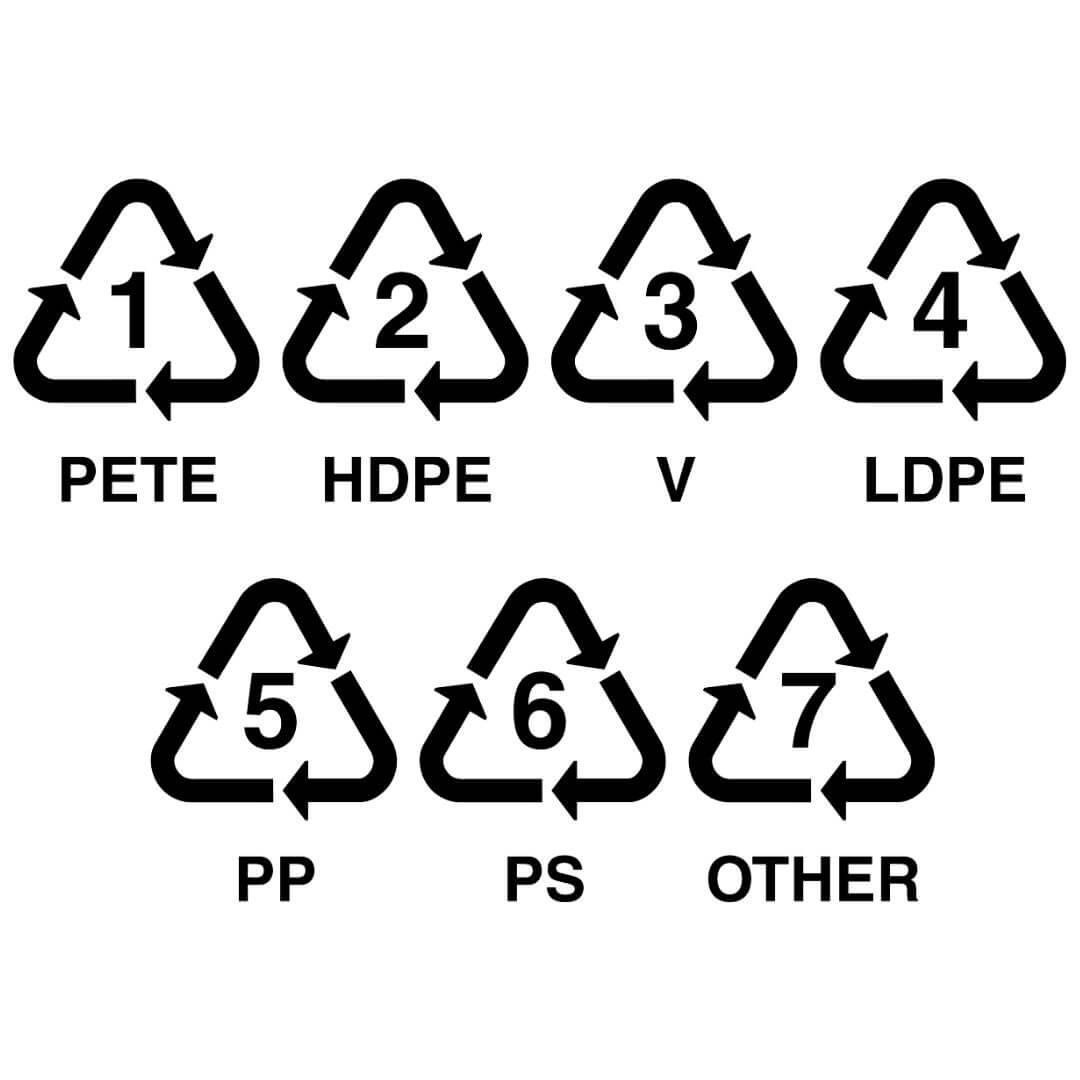
The trickiness reveals itself when you learn that type 1 and 2 are the only ones that are widely accepted by municipal recycling programs. The rest are not commonly recyclable, despite being wrapped in the same familiar and misleading chasing arrows. (This US Department of Energy guide explains the types in more detail.) Still, according to the EPA, only about 30% of items marked 1 and 2 end up being recycled. Since the code designates the type of plastic a product is made from, not whether it is recyclable, manufacturers are allowed to print it on pretty much anything.
“Starting in 1989, the Plastic Bottle Institute lobbied for state laws mandating that the code numbers appear on plastic products. Their express purpose was to fend off anti-plastic legislation, according to documents uncovered by the Center for Climate Integrity. The laws eventually passed in 39 states” (Grist).
Most plastic does not get recycled. Recycling plastic has become a huge technical and infrastructure problem, especially as composite packaging (packaging made from several different types of material) has grown more popular. For something to be recycled also requires a market for that material. Often there isn’t one and it’s cheaper to simply make new plastic. Only about 9% of the world’s plastics ever created have been recycled. The other 91% sits in landfills or gets incinerated.
Even scientifically, plastic literally cannot be recycled. At least, not in the way we commonly understand recycling. Other materials like glass, aluminum, and steel can be infinitely recycled into new uses, without degrading the material’s quality. Not so for plastic. Plastic recycling entails turning the material into pellets that get manufactured into lower quality products, “a practice known as ‘downcycling’” (The New York Times). Every time plastic is recycled, the quality diminishes, and eventually what’s left is smaller and smaller microplastics that stick around to pollute us for centuries. But maybe we should be grateful more plastic isn’t recycled because as Grist reports, “Recycled plastic, it turns out, is more toxic than virgin plastic, liable to leach dangerous chemicals”…
The lies have worked
From the late 1980s to the late 90s, Americans developed a more favorable opinion of plastic, despite the fact that recycling rates had hardly changed. As waste workers lost hope, the public and even the government were successfully fooled into believing the merits of plastics recycling. In 2019, 68% of Americans admitted thinking items with any number on the resin code could be recycled (Grist).
This lie of recyclability is what has allowed the plastics industry to continue, and even expand exponentially. Plastics production has ballooned almost 100-fold since 1960.
With the belief that something is recyclable comes a strange mental comfort. Probably because many of us had recycling engrained into our child brains as the epitome of good citizenship and THE environmental solution. A 2021 study demonstrates the way people psychologically frame waste creation as a good thing because it is associated with more recycling. Surveys even show that a majority of Americans believe recycling is one of the most effective ways they can fight climate change – which is not at all true (Grist). The reality is that for industry, the concept of recycling simply props up their ability to produce more and more and more plastics, even as the world already overflows with them.
2) Plastics are safe to use and have all around us
Scientists have known since the early 1970s that microplastics were ending up in the ocean and people’s bloodstreams, even deemed a significant health threat by the Council of Environmental Quality at the time (Grist). And yet 50 years later, that threat still exists, only much worse and much more prevalent.
As proven time and again, industry cannot be trusted to do the right thing of its own accord.
In the few cases where these harmful chemicals have been partially restricted in the US, the plastics industry has been given leeway to substitute them. On the Health Discovered podcast, Dr. Jane Van Dis shed light on the issue with this from her experience looking for items that were BPA-free back in 2008.
She explained, “unfortunately, what we’ve seen from industry is that they have no problem substituting chemicals that they know are just as harmful as the chemicals they’ve substituted…the fact is that the manufacturers substituted bisphenol S or bisphenol F for bisphenol A…in some cases the substitution is more harmful than that chemical that they’ve substituted for…it’s a tactic that industry has used to try and trick the public.”
Dr. Jane Van Dis’ example underscores the fact that just because a certain chemical is omitted, we cannot assume that any plastic products are safe, unless they become heavily regulated.
Consumer choice caveats
The importance of purchasing power
In our market economy, every dollar spent serves as a vote for what consumers want more of. Purchasing power is extremely potent when enough people wield it. In light of a twice-failed years-long global plastics treaty attempt, we can’t wait for every nation to agree we need to reduce plastic production. As consumers we need to use our power to force industry to make less. With no demand, the production of plastic becomes pointless.
The affordability issue
This is a real barrier for a lot of people. The lack of affordable alternatives to plastics is a serious problem, but it is also inflated as an excuse for inaction in cases where alternatives do exist readily and actually result in cost savings. In general, if you purchase things built to last, you end up investing in fewer products and in your long-term health. Cheaper plastic products are meant for single use and thus require you to repeatedly buy more. Buying food in bulk saves money and it keeps you from paying for packaging. There are many options today for buying quality materials secondhand, too – at a fraction of retail price. Every little swap makes a difference, and it doesn’t hurt to start with the most affordable ones.
Start small
How to limit exposure of something virtually inescapable? Start small.
Zero waste influencer Kathryn Kellogg recommends starting with ‘the big four.’ Four types of disposables that are easily avoidable and also constitute a huge portion of plastic waste. They are: plastic bags, plastic water bottles, plastic straws, and to-go coffee cups.
Once you have those down, you can also go a lot further. The three main ways microplastics end up in our bodies is through consumption, skin absorption, and inhalation. There are ways to cut back all three.
How to eat & drink fewer plastics
When it comes to eating and drinking plastic, it happens when your food and drinks are stored in plastic containers. The highest exposure occurs when your food makes direct contact with plastic through heat, acidity, and fat content of the food. These situations exacerbate chemical leaching from the plastic into the food, and then into your body when you consume it. A 2024 study found that over 3,000 chemicals from food packaging wind up in people’s bodies. Some we know are bad, and others are still unstudied. While the chemical effects accumulate over time, the good news is that some of the chemicals clear your body shortly after ingesting, and sustained reductions of chemical exposure can change your hormone levels and disease profile in weeks and months, respectively (NPR).
Avoid:
- Plastic bottled water (just twisting the cap off releases microplastics into the water)
- Storing hot foods or liquids in plastic containers
- Pre-packaged fruit & veggies
- Plastic straws
- Plastic cooking utensils
- Cooking with scratched teflon cookware
- Microwaving or dishwashing plastic food containers
- Drinking beverages out of aluminum cans – they are also all lined with plastic
Do:
- Eat a whole-food, plant-based diet
- Cutting out meat and dairy saves money, and studies show eating whole-food plant-based items improves your gut microbiome’s ability to eliminate plastic exposure inside your body. There are also more microplastics present in meat, seafood and heavily processed foods.
- Use glass & stainless steel food containers
- Donate your plastic cutting board or use it for some non-food related purpose
- Invest in a glass straw and carry it around with you, if you like straws
- Bring your own tupperware to restaurants to avoid plastic takeaway containers
- Use beeswax wrap instead of plastic baggies
- Take a reusable cup for takeaway coffee
- Dine in at coffee shops & ask for mugs over plastic cups
- Shop at a bulk food store and buy raw, unpackaged foods over prepared, packaged foods (Bulk food store locator)
- Utilize community gardens. Likely the most local and fresh food you can find, often if you volunteer you’ll get free fresh vegetables as a perk
- Opt for loose leaf tea over plastic tea bags
- Replace scratched teflon cookware (cast iron, stainless steel and ceramic are safer cookware alternatives)
- Find other non-food related uses for any plastic you currently use for food (random storage, give away, use to hold compost)
- Make more food at home to better control your exposure
Clothing is another unlikely source of plastic that ends up in our water and food, because every time you wash synthetic clothing, microplastics are shed and make their way into the waterway. This shedding can be reduced by installing a filter on your washing machine and buying and wearing clothes made only from natural fibers (wool, cotton, hemp, silk, linen – not polyester or nylon).
How to absorb fewer plastics
When it comes to personal care and beauty products, one thing you can do is make sure the items you purchase are phthalate-free and fragrance-free. Phthalates are an endocrine-disrupting chemical that is found in an incredibly large amount of lotions, shampoos, nail polish, makeup, and even menstrual pads. On American products, phthalates can simply be listed as ‘fragrance.’
How to inhale fewer plastics
We breathe in microplastics every day. While we can’t completely change that fact, there are three ways we can reduce the amount of microplastics in the air we breathe.
The first is to drive less. One surprisingly large source of airborne microplastics is from tire wear and tear. Tires are made of plastic, and the friction of moving tires against the road constantly produces microplastics that end up in the air and also in our waterways. According to Harvard School of Public Health, how fast you drive and how often you accelerate and decelerate also affects how much microplastic is released. Amazingly, an estimated 5-10% of plastics in our oceans is from tire wear and tear, and it is also credited for 3-7% of toxic particulate matter in the air (National Library of Medicine). Here’s a perfect example of how solutions to massive problems intersect. Public transportation and biking therefore not only lower greenhouse gas emissions, bolster community, and produce cleaner air, but they also must lead to better health outcomes by letting us inhale fewer microplastics, and keeps less plastic out of the food chain, too.
We especially have control over the amount of microplastics in the air inside our homes. Air purifiers with HEPA filters can reduce airborne microplastics. In addition, Dr. Jane Van Dis on the WebMD podcast Health Discovered recommends frequent use of a vacuum or wet mop in your home, because a lot of microplastic particles make their way into dust, which we can easily breathe in.
Get community minded
Over the past decade, single-use plastic bans have been tested throughout the world, with varying degrees of success. Lagos, Nigeria is a recent example and one that highlights a core challenge to these efforts: a lack of alternatives. But in cities with a strong waste management system, access to single-use plastic alternatives, and enforcement mechanisms, this policy can be a powerful tool. Extended producer responsibility laws are also gaining traction, seeking to force producers to pay for recycling programs rather than taxpayers. As are “truth in labeling” laws, like that which California passed in 2021 to prohibit the chasing arrows symbols on items that are rarely recycled. The legal front is a newly-explored avenue, too – last year, California’s attorney general sued Exxon for deceiving Californians into believing that recycling is a solution to the plastic waste crisis.
The plastics industry doesn’t have plans to back off anytime soon. In fact, production is poised to triple by 2060. That’s because once the world inevitably transitions from oil and gas to renewables, it is the oil industry’s intention to maintain their grip by going all in on plastics production (since plastics are made from oil) (Grist). Consumer action alone can’t fight such a beast, and therefore must be combined with a variety of really strong policies at every level.

 Clarity in Catastrophe
Leave a comment