Even if you don’t have a yard
A few weeks ago, I shared my brother’s story of turning our parents’ yard into a native prairie oasis. Native plants give us a sense of place, strengthen our food system, fortify ecosystem health, improve climate resilience, all while being self-sufficient and pretty to look at. This post is for those who understand the importance of native plants and want to get involved.
Part 2 of my conversation with Ben Thomas, botanist and curator of arid plant collections at the Missouri Botanical Garden. Read Part 1 here.
I asked him, if someone wants to grow a native yard but is a complete beginner, where should they start?
Most importantly, he stressed that you don’t have to be a trained botanist like him to grow a successful native yard. All it takes is a commitment and willingness to put in a good amount of effort in the first year, and experiment as you go. It requires a learning mindset.
Step 1: Get inspired
It starts as simple as this: explore the natural areas around you and find somewhere that strikes you as beautiful. Go hiking, and take pictures of plants that catch your eye.
Step 2: Get to know the region you live in
The work itself will look different depending on the geographic region you live in. Do some basic research into your local ecosystem. Understand how it works. Here’s a great map from National Geographic that can show you what biome you live in.
“The key thing is learning the natural cycles of where you live. I’ve lived in the desert and I’ve lived in the high Rockies, and those are very different cycles. In the desert, there’s a long period of dormancy. It takes a long time to establish your plants (it might take like 5 years), but you don’t have to do as much maintenance.” – Ben Thomas
Step 3: Find the right helpers
Thankfully, you don’t have to do this alone – no matter where you live, there are regional native plant experts close to you. Bring the pictures you took of plants you love to people at a local conservation group, botanical garden, or audubon society. Ask them what those plants are, if they’re native, and what you should know about them if you were to plant them.
Ben advises discretion when it comes to who you take native planting advice from. He warned against false prophets that will tell you you need to do it in a very specific way. Many organizations are, like most people, trained to think about plants in terms of how much the individual plant can thrive – rather than through a lens of community and ecosystem thriving. So, he recommends being skeptical of anyone that’s too prescriptive about things like exactly which plants to grow and how far apart to plant each one. The kind of mindset he suggests looking for in mentors is an experimental one that seeks to maximize ecosystem connections.
Where you acquire the native plants is also important for two reasons: avoiding plant clones, and finding the less loved, less popular native plants for your area. It’s no secret that Home Depot’s plants are not sold in the regions where they’re cultivated, but the plants they sell are also clones, which are grown in a facility. ScienceDirect defines plant cloning as “the process of creating genetically identical plants through methods such as micropropagation or tissue culture, facilitating the propagation of desirable traits.” This is a common practice among big box plant sellers. It’s undesirable because plant clones all share the same genes; this reduction of genetic diversity weakens ecosystem resilience, undermining the key purpose of a native yard.
The second consideration in where you bring your business is along similar lines: an opportunity to enhance your impact. Any native plant is going to be a huge net positive in comparison to asphalt, turf lawn, or an invasive plant. But which specific native plants you choose can determine just how big that positive impact is on the broader ecosystem. Ben explained that there are thousands of native plants in a given region, but you will find that only about 10 of them are widely commercially available. So in conversations with potential helpers, you’ll likely find that a lot of people recommend the same 10-ish native plants, because they are easy to acquire, popular, and thus ‘safe.’ But if everyone planted just those 10, it wouldn’t go as far to improve ecosystem diversity and resilience as would less popular native plants. Purple coneflower is one such plant that came to mind for Ben because it is native and already abundant: “in a way the critters that depend on that plant are already kind of safe. So there’s ways to expand it to have a broader net to support other insects.” This is why it’s an amazing idea to go beyond the top 10 native plants you’ll hear about the most, and you will have to find local growers in order to do that.
For both of these reasons, Ben recommends bypassing big box sellers like Home Depot and looking to local plant nurseries that specialize in native plants instead.
You can start your search for helpers here:
POLLINATOR PLANTS BY NORTH AMERICAN REGION
Step 4: Choose your strategy
There are many ways to grow plants, but the two main routes are planting seeds and planting pre-grown plants. The seeding strategy requires some knowledge about what those plants look like as they grow from infancy, while putting pre-grown plants into your yard is entirely beginner-friendly. Pre-grown plants also allow for intentionality with the overall design of your yard. Since they are fully grown, they are more expensive than seeds, but it’s a perfect opportunity to support your local native plant economy. Seeding – using pre-made seed mixes that you can just scatter and water – is much cheaper, and though it calls for more knowledge, appeals to the more experimental-minded who prefer to forgo a curated lawn aesthetic. Alternatively, you could get creative and do a mix of both strategies!
The next decision revolves around weeds. A weed is simply any plant that grows in an area where it’s not wanted. They are a fact of life in any natural space, but there are several methods to manage them in the early stages of your native yard so they don’t disrupt the growth of your newly planted natives. This is called weed suppression, and the most effective way is to start in the beginning. You can either bury the existing weeds in your yard, or kill them. Common methods for burying include covering the yard with a layer of compost, mulch, or cardboard. A more aggressive approach to kill the weeds is solarization, which is essentially using a tarp to cook the ground and kill the seeds lurking on or beneath the surface. This is a necessary step to ensure a safe starting point for your native plants in this fragile beginning while they set up shop with their root systems and get their bearings.
What if I don’t have a yard?
As of 2019, 80% of Americans own a yard, so 8/10 Americans have the ability to try planting a native garden – which is pretty amazing. But if you are in the 20% that doesn’t have that luxury, like me, Ben shared some creative workarounds.
For the community-minded:
You can sign up for a garden plot at a community garden. Then, Ben suggests taking a certain corner or percentage of your plot and setting it aside for native plants. I love this idea. Most people with garden plots end up yielding way more food than they can eat anyway, so why not share with some insect friends? Every little bit helps.
You can of course also volunteer with your local helpers from Step #3 above. There are plenty of native plant organizations that put on events and opportunities around planting, maintenance, hikes, garden tours, and outreach.
For the rebels:
A strategy for the vigilante types.
Ben shared with me another unorthodox strategy he uses to multiply his native plant impact, while getting to be a bit mischievous in the process. “This is what I like to have fun with: in the front yard there’s a type of wild peaflower, and it makes these seeds that are covered in these like fish-hook velcro-y hairs, and it’s a really great plant for caterpillars. There’s so many different species that depend on it.
But it’s kind of weedy, and it’s really annoying because anytime you walk past it, it gets stuck on your legs. So where did I plant it? Right at the edge of the sidewalk.”
He specifically put it in a high-traffic area because of these annoying features. This way, it collects on dogs and people that pass by so those seeds end up spreading all throughout the neighborhood. Anyone can do this! Just find some particularly stubborn native plant seeds and spread them in high-traffic areas around the city you live in.
For the creatives:
One part of the equation to get more thriving native plants is to plant more natives. The other part is to subtract invasive plants. Since a lot of real estate is occupied by invasive plants, you can help make room for ecosystem-strengthening native plants by getting rid of the invasive plants of your region. According to Invasive Impact Initiatives, 400 out of 958 US endangered species are at risk because of invasive species. The chosen strategy of Invasive Impacts Initiatives for managing invasive species is upcycling, repurposing them for often creative uses. Think jewelry, art installations, crafts, textiles, and more. They recently released the first invasive upcycling toolkit that anyone can access.
Structural barriers
Even if you do have a yard, some structural barriers exist which challenge growing a native yard. There are neighbors and homeowners associations you’ll likely have to contend with.
My parents don’t currently live in a HOA, but about 28% of Americans do. Many cities and HOAs have laws, ordinances, and codes that require and enforce manicured turf grass front lawns. These rules strictly govern what a homeowner can and can’t do in their own yard. It’s an outdated aesthetic legacy of British aristocracy that unfortunately still dictates American taste. Appearance is linked to economic value, and with lawns, conformity is interpreted as safe and profitable. Over the past few decades, homeowners pushing back against these rules have led to lengthy, drawn out cases that usually result in the power of the lawn prevailing. But in recent years, the punitive disincentives to native yards are turning to positive incentives in some places, especially in the West where the impacts of droughts have become all too salient. For example, a cash rebate program cropped up in the Nevada desert, paying residents to replace grass with native vegetation, and California also instituted a cash for grass program. The culture is changing beyond just homes. In 2019, Phoenix airport replaced 11 acres of turf grass with native plant landscaping (which reduced their water usage by 5 millions gallons a year, saves $400,000 annually, and also supports their carbon emissions reduction goal).
Paradigm shift & cultural backlash
Despite the changing tides, norms haven’t yet flipped and the native plant revolution still has a long way to go. Here’s a list of prevailing societal norms: Viewing plants as decorative objects and not living beings. Mowing the lawn. Seeing humans as separate from the natural ecosystem we live in. Thinking that owning land means complete freedom to do whatever you want with it, so it’s okay to act without regard to the non-human world.
Building a native ecosystem in your yard threatens all of these large-scale societal norms, so be prepared for some cultural backlash, or at least confusion. On the individual level, confusion is more likely – people just don’t know what they don’t know. In that knowledge gap, the status quo fills in; right now in the US, that’s unfortunately turf lawns. But fortunately, Ben found there to be built-in protections from these side-eyes in the native yard planting experience. Growing plants is a gradual process, a quality that circumvents the human alarm associated with rapid change. No one knew what he was converting the lawn into until years in when the plants really started to visibly flourish, and by then, he was too invested to be deterred by outside opinion – not that anyone said anything negative (to his face).
But the best defense for undertaking a project that’s bound to receive a little pushback is to feel deeply aligned with why you’re doing it. For Ben, it’s a combination of curiosity, love for non-human creatures, passion for a thriving local environment, and a sense of justice. He wants to experience for himself and others something that was ripped from us. “We grew up in the tall grass prairie region and we’ve never seen one because it’s one of the most threatened biomes in the world,” he told me. The problem is, people don’t grieve what they don’t know was taken from them. Ben wants to make our yard beautiful so more people care about the tall-grass prairie ecosystem that once flourished across much of the country. If we can restore what once was, even on as small a scale as a modest front yard or a random alcove in your neighborhood, we can start to remember what’s worth saving and cultivating.
We also have a need and opportunity to completely reconceptualize urban areas on the whole. Urban habitat is the largest expanding ecosystem in the world, and that’s not changing anytime soon. Conventionally, urbanization comes hand in hand with ecological destruction and biodiversity devastation. We can flip that on its head and make our cities into biodiversity hotspots by joining the native plant revolution in all the ways outlined here. Integrating nature into our cities only makes our lives and non-human lives better, today and in the years to come.
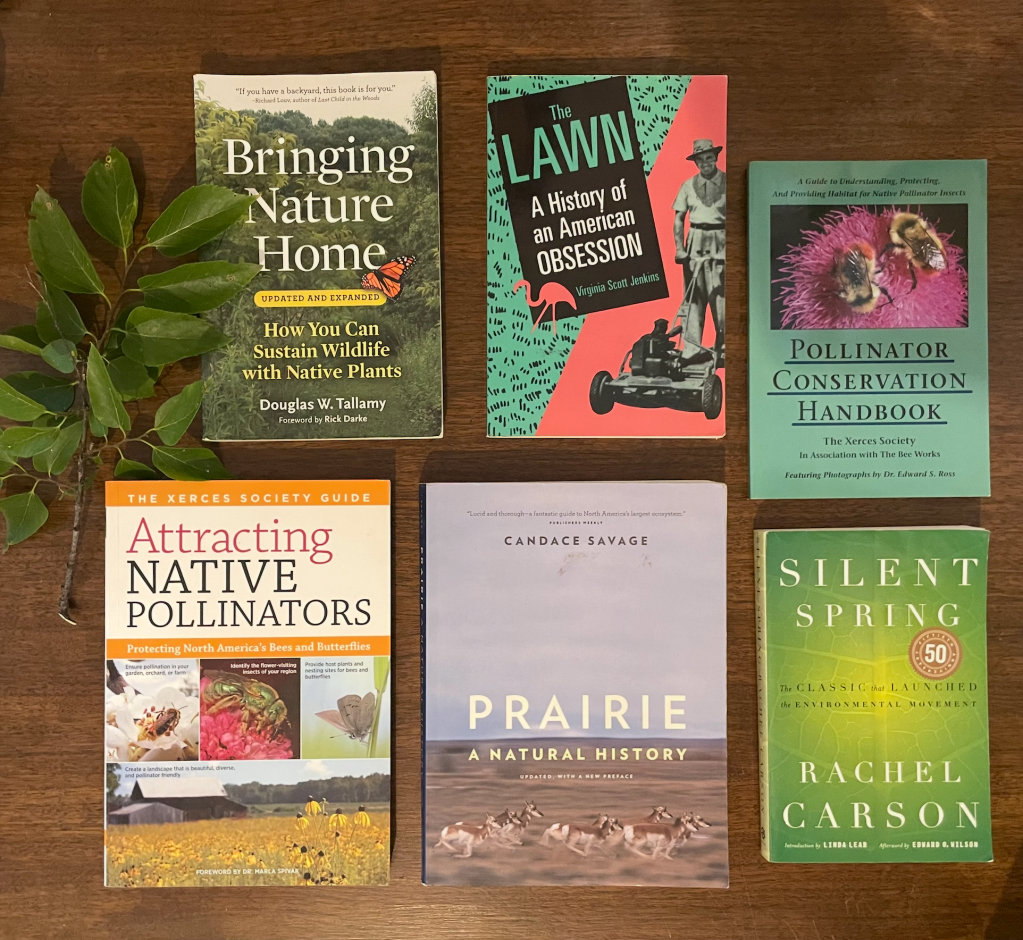
For further learning, here are some books for inspiration, context, and direction:

 Clarity in Catastrophe
Leave a comment