
This apocalyptic moment we’re watching play out in LA is a microcosm for the climate crisis and the intersecting challenges we face. This ongoing catastrophic event is not an act of God out of humanity’s control – it emerged as the logical result of many actions over time. Which means we have the power to improve things through corrective actions over time.
How, exactly, did we get here?
Storied history of ignorant and harmful land management
Fires in this ecosystem are natural and needed. Annual controlled burns are crucial to the health of the land. But those in power since colonization have refused to acknowledge this truth, neglecting to allow controlled burns and opting instead for a zero fire tolerance approach – to the detriment of people, wildlife, and the land alike. ““Total fire suppression,” the official policy in the Southern California mountains since 1919, has been a tragic error because it creates enormous stockpiles of fuel.” (Ecology of Fear).
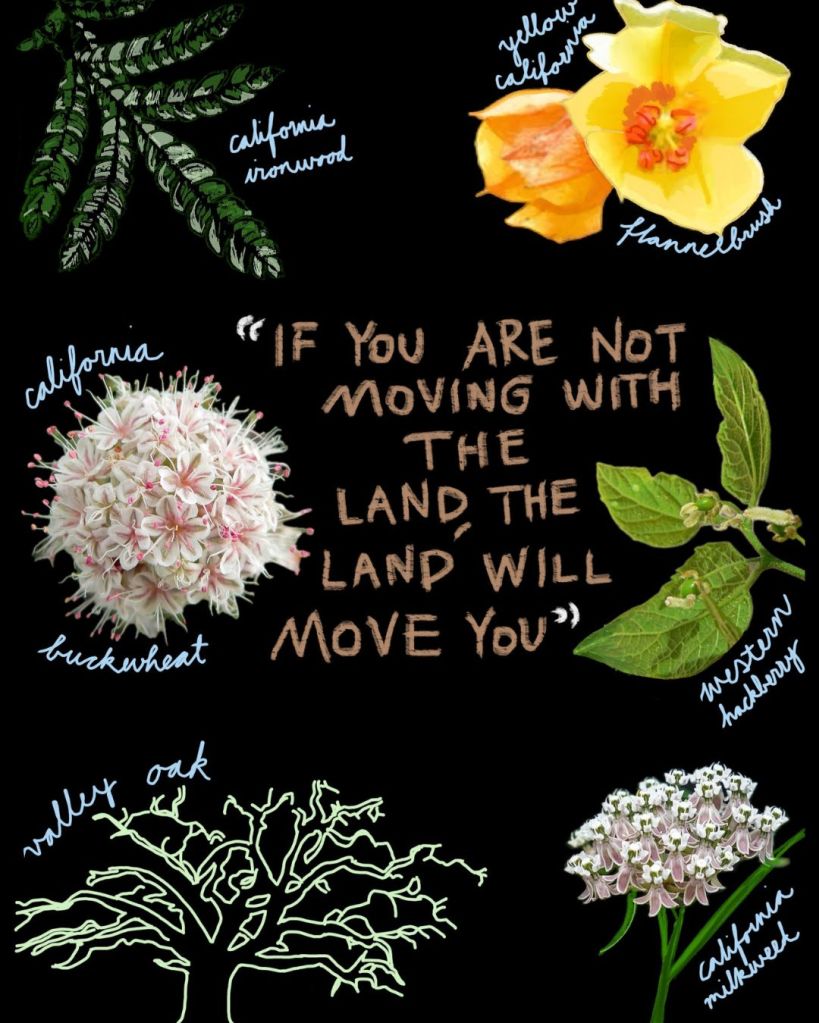
Many plants indigenous to Southern California are “pyrophiles,” meaning they actually require fire to complete their cycle of reproduction – evolved for harmony with a fire-loving land. And yet, land planning decisions have made it so LA is filled with invasive species, which did not evolve in and are thus not equipped for a fire-prone landscape. When they die, they accumulate as dry brush all over the ground and become a huge source of fuel for wildfires.
“If you are not moving with the land the land will move you.” – Re-Seeding Imaginations
This lesson has long been known by the Natives that originally stewarded the land (and still do, despite Western society’s destructive land practices winning out). California’s colonizers have had many decades to learn this lesson, as history repeated itself via calamitous fires again and again over the past century.
Perverse incentives
Exacerbating this irresponsible land management is the cycle of backwards incentives we’ve allowed that perpetuate the damage from fires.
Zoning
Instead of respecting the land’s firesome ways by keeping our distance, we have continued to allow and encourage development in extremely fire-prone areas.
Subsidies
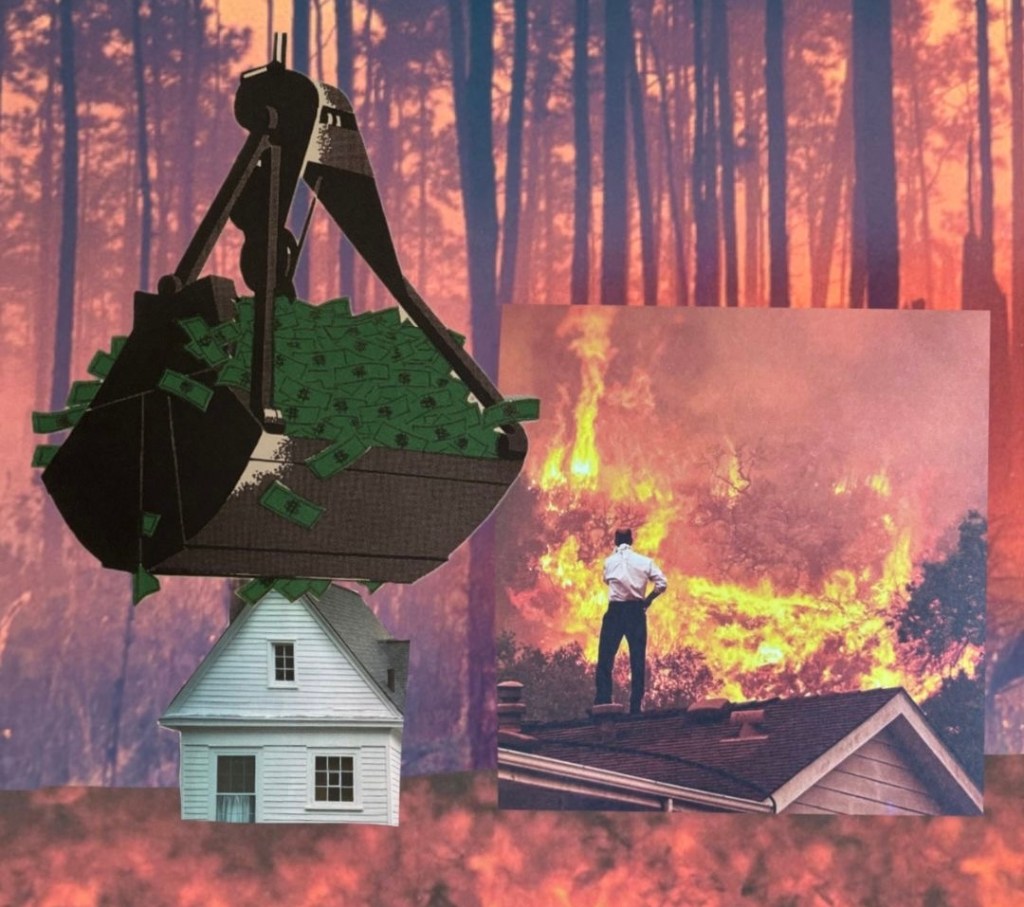
Insurance and disaster relief subsidies have incentivized this continued development in risky places like Malibu. “By declaring Malibu a federal disaster area and offering blaze victims tax relief as well as preferential low-interest loans, the Eisenhower administration established a precedent for the public subsidization of firebelt suburbs.” (Ecology of Fear). Fire events would often perversely result in a relaxing of land use regulations and even the fire code. Truly irresponsible levels of growth were enabled. “The county’s Regional Planning Commission promptly endorsed developers’ wildest fantasies by authorizing a staggering 1,400 percent expansion of the Malibu population over the next generation: from 7,983 residents in 1960 to a projected 117,000 in 1980.” (Ecology of Fear).
Insurance in California often fails to reflect true risk in its costs. In 1988, Proposition 103 reduced insurance rates by 20% and subjected future rate increases to public oversight, protecting consumers from predatory rates but also resulting in artificially low costs. Artificially cheap insurance premiums have encouraged Californians to live in areas with the highest risks, also inciting more housing production in these risky areas.
The housing affordability crisis
Lack of affordable housing has caused people to move further away from urban areas to more rural areas, into the wildland-urban interface (WUI), the term for human development in undeveloped wildland. The wildland urban interface has been the fastest-growing land use type in the contiguous US, with a 41% increase in new houses since 1990. Rising populations of big cities on the West Coast also prompted developers to start building houses on these lands that have always experienced wildfires on a regular basis.
Fossil fuel burning
Most of us no longer need more evidence of how bad the climate crisis is and continues to become. We see it all around us. In the world’s largest public survey on climate change, released last year, 80% of people globally want more climate action from their country.
Let’s not mince words about who’s really to blame: the fossil fuel industry and our failing governing structures that enable such abuse. Fossil fuel companies conducted internal studies that accurately predicted the disasters of climate change way back in the 70s, then conspired to spread disinformation about it so they could keep burning fossil fuels for profit. (Now their strategy has shifted from climate denial to greenwashing that they are somehow part of the solution). It’s easy to narrow the focus on who is governing locally at the moment and location, and those conversations are important. Who we choose to govern us matters quite a bit. But it should not draw attention away from the root causes: the faceless few that sowed the seeds of unspeakable destruction decades ago, and continued to fan the flame of climate damage all this time.
Natural disasters happen. But gone are the days when they happen just because Mother Nature felt like it. The climate crisis plays a huge role in making most natural disasters much worse, including wildfires. In this case, that’s due specifically to two features of human-induced climate change: weather whiplash, and the destabilization of the jet stream. ‘Weather whiplash’ is an increasingly common and intensifying pattern of rapid shifts between heavy rain and drought, and it’s happening even faster than climate models projected. It’s what caused LA to have record rainfall and flooding last year, and this year, no rain at all. That rain grew a huge amount of invasive grasses, which dried out over the summer of record-breaking heat (which we can also thank climate change for) to become prime fire fuel. Climate change has also been destabilizing the jet stream, which is a river of air that moves around the globe and shapes weather patterns. The warming of the oceans changes the pressure gradient, which affects the jet stream’s usual path, causing it to meander in weird and extreme ways. The destabilization of the jet stream is changing the pattern of the Santa Ana winds, which are annually occurring hot, dry, winds that blow from the desert and speed down the side of the mountains of LA. This deadly combination led to absurdly strong, hurricane-force-level Santa Ana winds, gusting over 100 mph. This allowed the fire to at one point grow at a rate of 5 football fields per minute. Because the climate crisis was avoidable and wrought by a greedy few, a more fitting name than ‘natural disaster’ for these events is “climate crime.”
This is by no stretch of the imagination the first time the climate crisis has brought apocalyptic-level destruction like this. But for a lot of people, this is the closest to home it’s gotten. This unattributed quote has been making rounds all across the internet in the face of this tragedy, and it’s clear why:
“Climate change will manifest as a series of disasters viewed through phones with footage that gets closer and closer to where you live until you’re the one filming it.”
Horrifically, this is not a one-off event. This magnitude of destruction will continue and accelerate in the coming years due to the climate crisis and the prevailing powers that be.
Feel the grief, feel the sadness, feel the anger. In whatever order happens naturally for you. Don’t be afraid of the big feelings. Because there are solutions. We just need to adjust our expectations and our strategy of relying on certain ones. Exploring such solutions is what Clarity in Catastrophe is for.
Solutions
Organizing for change is crucial. This piece confronts the hard-to-swallow pill that ‘the world’ is not going to ‘wake up’ after one very bad disaster, not even this one. What’s needed is for the power balance and the incentive structures to change. That requires more engaged movement building on a broad, sustained scale. None of these solutions alone is sufficient, but these are all parts of the puzzle that can and should be tackled, in tandem.
Climate Resilience
This level of destruction was and is preventable. While our ability to avert individual disasters at this point is limited, we can increase our resilience by strengthening our ecosystem, community, and networks to better withstand and adapt to them. It is possible to prepare for disasters to minimize damage.
Ditch the invasives, embrace the natives (plant species)
This is one of the easier solutions you can plug into if you live in California. Anyone can do their part to make sure their home and neighborhood is working to plant more native species and get rid of the invasive ones.
Policies vs community-based efforts
Invest in both, but invest more in community organizations focused on building climate resilience. The circumstance we find ourselves in is a government that is highly amenable to being bought out of passing life-affirming legislation. We see this on crucial issues like gun control, healthcare, and climate action. Community works faster than government. We should be pushing relentlessly to get money and corruption out of our politics, but we can’t afford to hold our breath and wait – we need to take climate action into our own hands, and that means investing in our community organizations and mutual aid. Here is a starting point to explore some community-based climate organizations in Southern California.
Many Angelinos are saying they’re never felt so close to their community as right now. Imagine if we all prioritized community support on a daily basis at the level we do when unimaginable disaster strikes? Truly, imagine what we could accomplish if we dropped the American individualism imperative and shifted the culture to be community-centric as our default. Sharing resources and engaging in movement-building collective action has the power to entirely transform our society if we choose to commit ourselves to that lifestyle.
Zoning Reform
After destruction, it’s tempting to direct energy straight into rebuilding. But rebuilding blindly is not a solution. It simply invites more future damage. 94% of the 3000 buildings destroyed by wildfire between 1970-1999 were rebuilt in the same place. “Since 1993. almost half of California’s new homes have been built in fire hazard areas” (Ecology of Fear).
It’s estimated that 1 million new homes will be built in California’s high risk wildfire zones by 2050. We can and should ban further construction in fire zones. We need to humble ourselves and accept that maybe in some areas, we can’t simply “fireproof” against extreme, climate-fueled firestorms.
It stands to reason that if housing affordability issues partially led to such expansive WUI development, then infill development and other housing crisis solutions would also serve to minimize wildfire damage.
Land Back
Land Back is exactly what it sounds like. It’s a movement that aims to reclaim land back under the stewardship and governance of indigenous people. In addition to the simple and clear morality of this goal, it is also an obvious remedy to the ecosystem collapse we face. Indigenous cultures know how to care for and sustainably live in balance with the earth and, clearly, the U.S. government does not.
This is a serious solution that is gradually becoming less of a pipe dream:
“Land returns are happening more frequently across Turtle Island. In 2022, New York state returned 1,023 acres of Onondaga land, 465 acres of sacred land were returned to the Rappahannock Tribe with assistance from a federal grant, and the Snoqualmie Indian Tribe reacquired 12,000 acres of land in the Tolt River Watershed by way of a nonprofit environmental group. The state of California might launch a $100 million program for tribal nations to buy back their land for preservation purposes. In the greater Seattle and Bay Area regions settlers can pay rent or a land tax to the area’s tribes. In some cases, individuals are returning their own land.” (Prism)
Making Polluters Pay
There is growing opportunity in wielding the power of law to win damages from the fossil fuel industry to help pay the cost of catastrophic events like this that were amplified by the climate crisis they ignited. There is an increasing number of lawsuits being brought to hold Big Oil accountable.
Some are also fighting for legislation to make polluters pay. And young organizers like The Sunrise Movement are changing the culture to help people understand the big picture of who is accountable when these disasters happen.
Resources for LA
Mutual aid is saving people’s lives right now. This should be the role of the government, but our institutions fail us time and again. In times of disaster, community shines through.
See this vast database of resources to support those suffering from the ongoing fires in LA.
Clarity in Catastrophe is a reader-supported publication. To receive new posts and support my work, consider becoming a free or paid subscriber on Substack.

 Clarity in Catastrophe
Leave a comment