
18,500 attendees, 750 organizations, 350 events, 7 days. SF Climate Week 2024 was organized by Climatebase.org and kicked off with a bang on April 21. Topics spanned arts and culture, data & finance, energy, climate tech, policy, workforce development, and much more – not to mention the high-demand social events like karaoke, jeopardy, hike, and happy hours.
I had the privilege of attending 6 events throughout the week, but if you missed out, these takeaways are for you.
AI for Earth with Jetstream & Toba
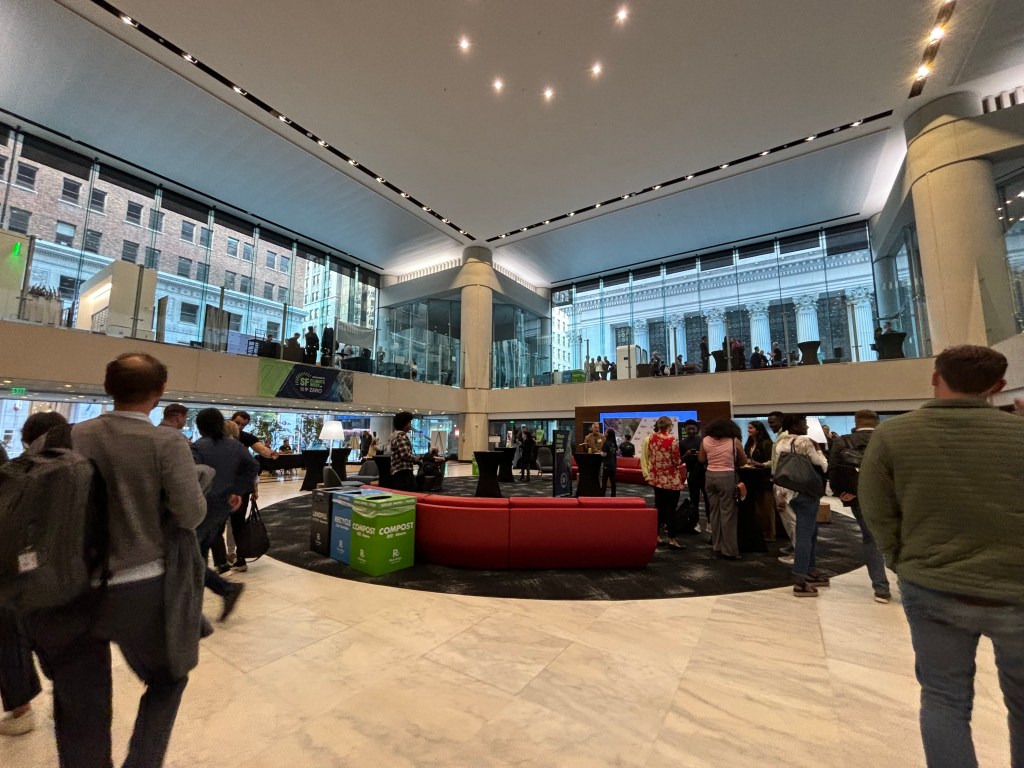
To kick things off, I went to 9Zero Climate Innovation Hub & Coworking to watch presentations by Bedrock Energy, Rhizome, and Tenlives. I knew that climate tech is booming in the Bay Area and that there are people using AI for ‘good,’ but as someone who works on climate in the government/policy realm, I’m pretty blind to it (we public agencies don’t keep up with the latest technology too well). These short presentations blew my mind a little bit, giving me just a taste of the truly impressive capabilities AI has for climate.
Takeaways:
- AI can optimize our food system to increase efficiency and reduce emissions by a third. Tenlives is starting with cats.
- Rhizome is using AI to make the electric grid more resilient. 50% of US electricity poles are 50 years or older, which is also their anticipated lifespan. Rhizome has built the only comprehensive resilience planning platform in the world for electric utilities. They use AI to make snapshots of the grid over time, assess asset fragility, perform extreme weather projections as well as future system consequences.
- Bedrock Energy is trying to scale geothermal buildings in urban high-risk environments. The first kilometer of earth’s subsurface provides 24/7 heating and cooling everywhere in the world, moving heat in and out of the ground. Geothermal increases efficiency of heating and cooling by 3-4x. Bedrock made their own drilling rig that can send real-time data while drilling to find risks (dangerously, manual drilling can’t do this). This technology brings down the cost of geothermal drilling by a staggering 10-20x.
TLDR: There are climate tech startups doing groundbreaking work using AI to accelerate climate solutions, from the grid to our buildings, and even…cat food!
League of Creative Minds Climate Debate
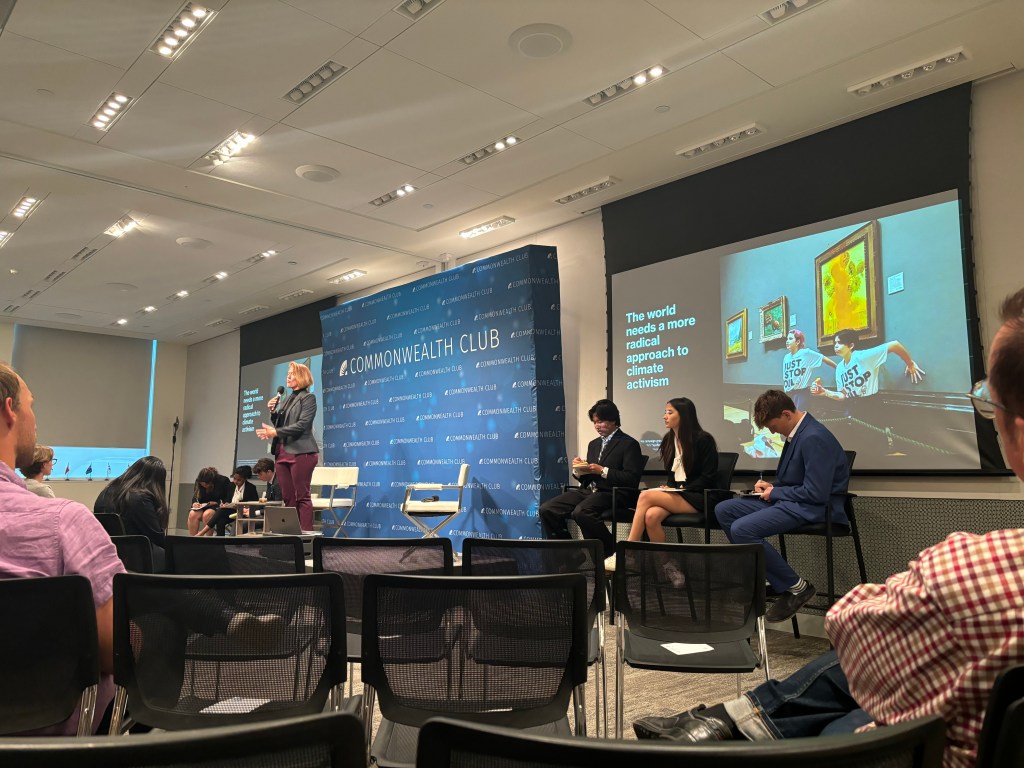
From 9Zero, I ran down to the Embarcadero and found my way to The Commonwealth Club to hear from Bay Area youth with the League of Creative Minds.
Takeaways:
- It was exciting to watch the Bay Area’s youth bravely and eloquently tackle difficult, important conversations around climate, such as “Do we need a more radical approach to climate activism?” These are nuanced topics, and tough questions to answer on the spot, in front of a crowd. If high schoolers are doing all that, then the rest of us can certainly have these important conversations within our own spheres of influence. As Katharine Hayhoe says, the #1 thing we can do about climate change is to talk about it.
TLDR: We should follow these young people’s lead and talk substantively about climate more.
Turbocharging Conservation Outcomes in Africa through Educational Films
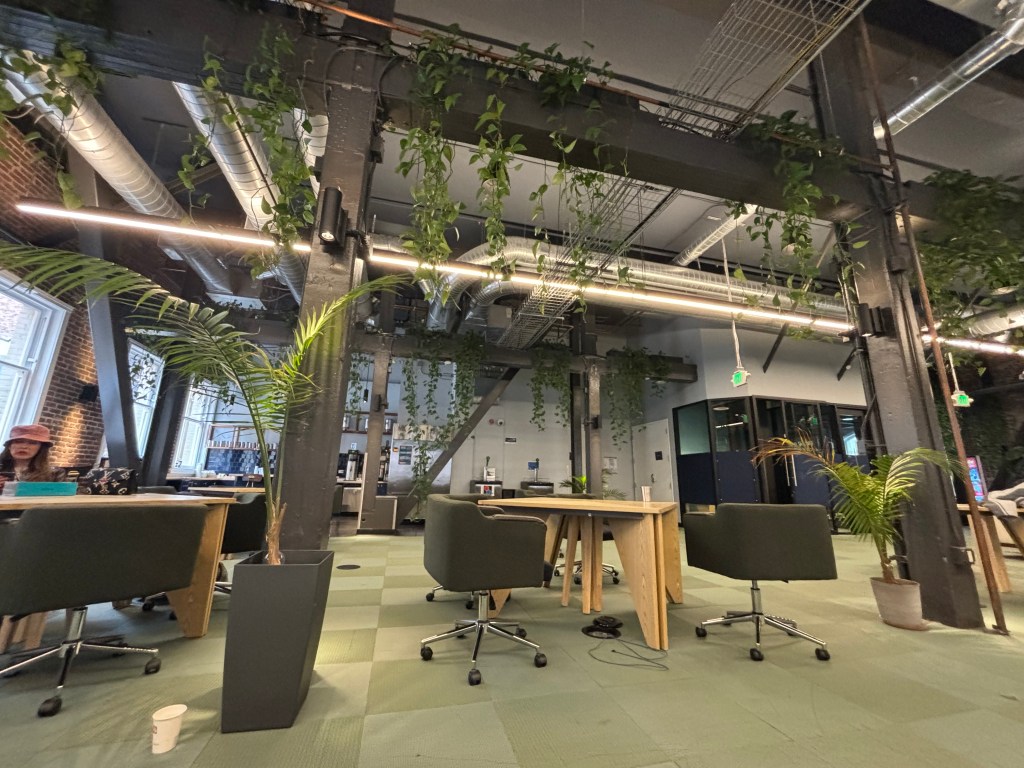
On Tuesday, I got to experience another amazing workspace in the city – Werqwise – for this inspiring event with WildlifeDirect and SF Conservation Club. The presentation took place in a spacious room with couches and greenery decorating the ceiling to the floor.
Takeaways:
- Wildlife Direct is a hugely successful wildlife conservation organization in Kenya, funded through a public-private partnership between the US government and Disney.
- They focus on training local kids to become conservation leaders. A National Geographic kids conservation program, Team Sayari is the name of the documentary series created by kids, for kids, in Africa. Across 20 episodes, 7-12 year-old kids interviewed experts about conservation. The series is available on youtube for anyone across the world to watch.
- There are tons of wildlife in Kenya and a lot of conservation content is shot there. Despite this, most kids and people that actually live there can’t afford to access it like tourists do. Wildlife Direct is working to increase kids’ access to and engagement with the rich wildlife and biodiversity that is so close to them.
- The program currently reaches 11,000 kids and 200 schools, all near areas with biodiversity issues and nature and wildlife hotspots.
- Amazing accomplishments of the effort include kids taking initiative on innovative reuse projects and a successful advocacy campaign in 2013 focused on the plight of elephants in Tanzania, which led to the 2014 Wildlife Management Act. The former can be credited for the reason elephants still exist in Kenya.
TLDR: Public-private partnerships are paramount, empowering youth is crucial, and media is an incredibly powerful tool. Putting all 3 together creates an unstoppable force for change.
“Reinventing Recycling” Documentary Screening
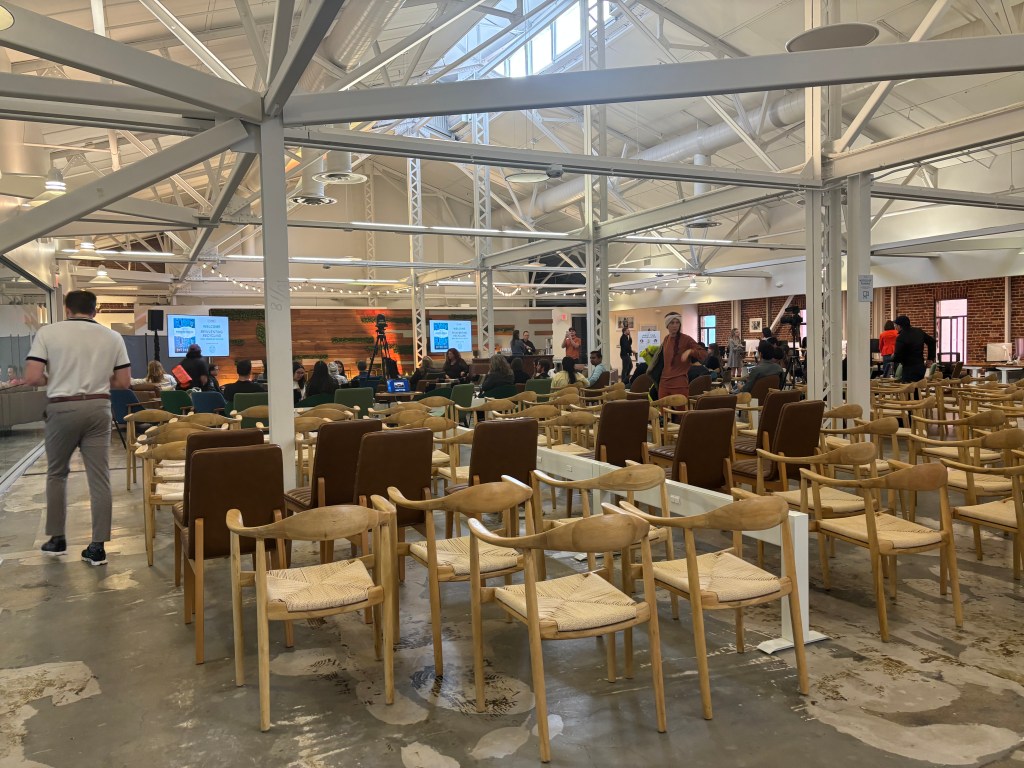
Wednesday evening brought me to Telegraph Hill for a refreshing and illuminating documentary tackling the ridiculously complicated subject of recycling. At Brightmark headquarters, the post-documentary panel consisted of the filmmaker, Brightmark’s CEO, and representatives from the National Renewable Energy Laboratory and BOTTLE Consortium, and the Ocean Plastics Recovery Project.
Takeaways:
- Shocking trends
- US plastic recycling rates have gone down a whopping 40% since the pandemic. Research shows that when we recycle more, we use more. Composite packaging, which is harder to recycle, has gained popularity. Most shocking to me: most states don’t recycle glass!
- Problems
- There are disincentives to reprocessing waste. We lack of a coordinated approach – for example, no uniform recycling standards in US (the plastic chasing arrows symbol makes no guarantee of recyclability). There is no scalable solution.
- Complications
- Lifecycle assessments show us we won’t plastic ban our way out of this, and complete bans are only good for the privileged. Plastic comes from fossil fuels, so it’s an energy crisis too. Pollution and the energy used to make plastics is the biggest problem. Bioplastics, a popular plastic alternative, take a ton of agricultural resources. Two thirds of plastics are necessary (think industries like healthcare/medicine). The 5 trillion individual pieces of plastic in the ocean will continue to multiply as they break down.
- Solutions?
- There is a patchwork of efforts to think outside of the box and tackle the waste problem from a whole host of angles. More mono material design and more regulatory incentives / extended producer responsibility (EPR) laws will help. An organization in Ashley Indiana is turning plastics back into crude oil. Plastics could one day become food proteins (unbelievable as it sounds). Brightmark converts the hard plastics into pellets. Esthercycle startup does bioplastic recycling. A robotics in recycling org has a vision system using AI that is breaking ground by learning and separating every form of packaging in the world to improve recyclability. Other organizations highlighted: National Renewable Energy Lab at DOE (BOTTLE gov lab), Alaska Center for Green Debris, and Ocean Plastics Recovery Project
- Panelists encouraged impatient optimism and for people to not give up on recycling.
TLDR: The waste problem is even more complex than I realized – the solutions are multifaceted, varied, and sometimes contradictory. Innovation is necessarily driving a lot of the solutions, and there is still hope to be had. A strong concoction of regulations, new technologies, and whole-systems thinking is needed to match the vastness of the issue.
Turning toward Climate in Times of War & Peace: A Meditation & Discussion
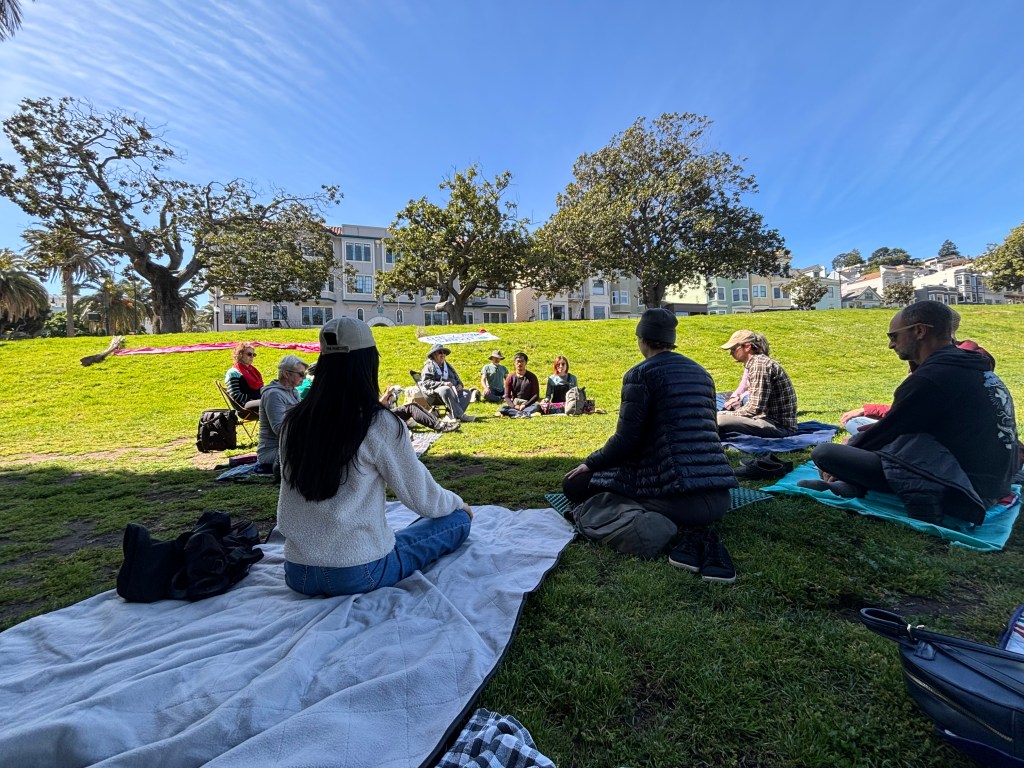
A beautiful start to my weekend, I spent Saturday morning meditating about climate in Dolores Park, surrounded by blue skies, green grass, and birds chirping. San Francisco Buddhist Center (SFBC) Green Sangha hosted this relaxing and meaningful event as SF Climate Week 2024 neared its end.
Takeaways:
- I made lovely connections and enjoyed vulnerable conversation spurred by small-group discussion, including:
- What are you feeling called to do?
- What helps us stay inspired and engaged?
- What helps us not be numb?
- How might I support myself in befriending uncertainty?
- What’s helpful and what’s difficult in our spiritual practice?
- In-person, outdoor connection with compassionate strangers filled my cup
TLDR: Remember to connect to nature, yourself, and others while doing climate work. That’s the fuel!
California Native Homeland Festival
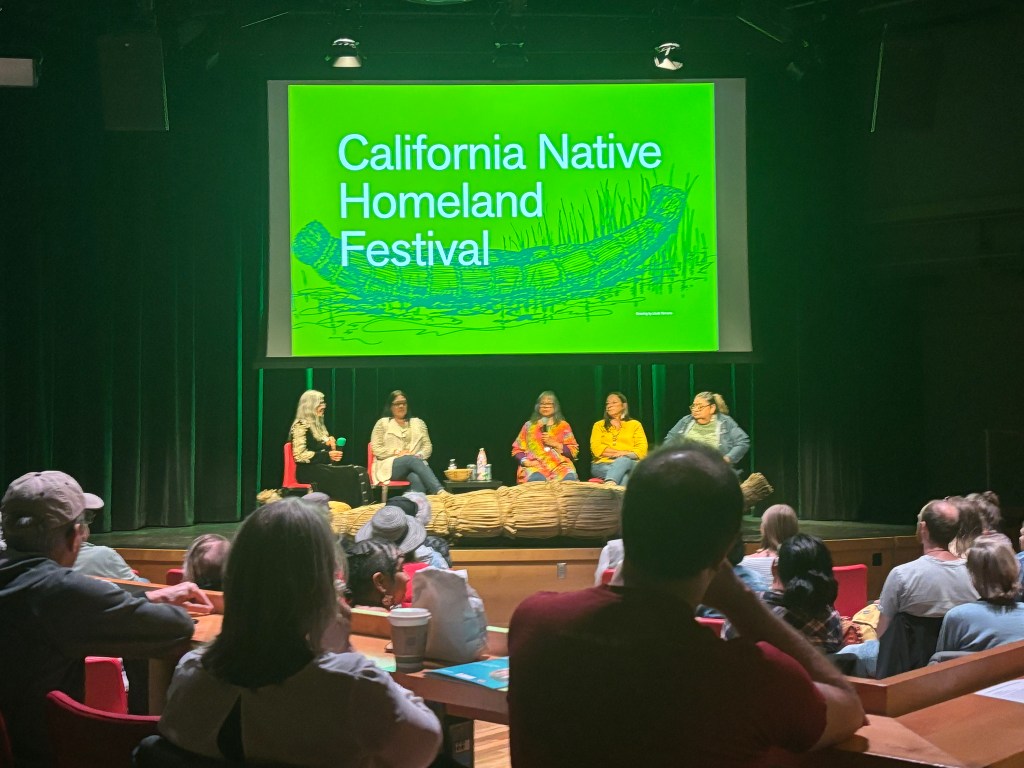
I closed out the week with an afternoon of powerful indigenous panel discussions at the Exploratorium, curated in partnership with Association of Ramaytush Ohlone and American Indian Cultural District.
Takeaways:
- The first panel took us through the process of building a tule canoe. The emphasis is on community; building the canoe is just a byproduct of building community.
- The second panel consisted of traditional gatherers and basket weavers testifying the deeply worrying changes they’re noticing on the ground.
- CA has lost 80% of its meadows in the past 100 yrs (it’s now forest land). meadows are sponges that hold water & trees are causing problems. Climate change is changing gathering times; there is no predictability anymore. Red flags: Roadrunners have vanished. All the wild oak trees are dying. Native food sources like acorns are disappearing or are filled with bugs due to fire and lack of forest ground cleaning. This leads to tribes needing to change their dances and traditions without the necessary ingredients. Climate change is changing tribes’ entire lifestyle and identity. Thus, government has the power to change an entire population of people.
- For the government to know what’s happening on the ground, they need to talk to culture bearers instead of Tribal Councils. Tribes don’t get paid for tribal caucuses and federal tribal consultations, and should be.
- There is a difference between indigenous knowledge and traditional ecological knowledge – the latter takes into account historical conditions as a baseline.
- A call to young people – native elders need to teach somebody their ways. There are tribes that have rebuilt an entire culture based on anthropological notes, but the native form of archiving is teaching and storytelling.
TLDR: We non-natives need to engage with and follow the lead of native leaders who are on the ground and understand the problems and solutions better than anyone. As one panelist put it, “Stop being a visitor and start being a steward.” Understand that climate change is changing tribes’ entire lifestyle and identity. Support native efforts toward culture rebuilding.
This week’s events left me feeling energized and inspired, filled with a sense of community and solidarity that is so nourishing. The events highlighted the importance of climate initiatives coming together as diverse teams and partnerships – indigenous folks, founders and investors, innovators, techies, government. I especially appreciated the intergenerational thread; nearly every age range was represented at some point. Sticking with me is the hummingbird story, mentioned during the ‘Turbocharging Conservation Outcomes’ event. It’s a Quechan tribe story about a hummingbird repeatedly carrying one drop of water at a time during a forest fire, while all other animals were frozen with fear. As this week demonstrated, there are so many ‘hummingbirds’ doing what they can to combat the climate crisis, and it starts to add up when we work together.


 Clarity in Catastrophe
Leave a comment